65 products

  • Gift Card EG - Equigerminal

    Gift Card EG

    Shopping for someone else but not sure what to give them? Is he/she a Horse-lover ? Give them the gift of choice with a Equigerminal gift card. Gift cards are delivered by email and contain instructions to redeem them at checkout.Our gift cards have no additional processing fees.

    381,19 kr - 1.524,78 kr

  • Equine Piroplasmosis qPCR

    Equine Piroplasmosis qPCR

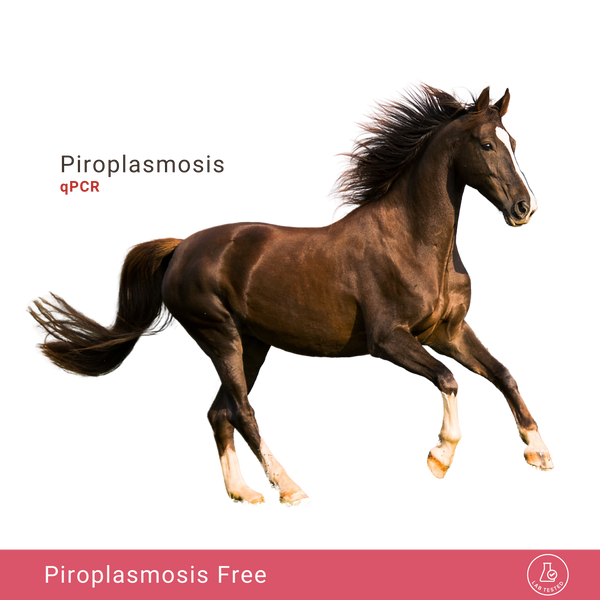
    Our Equine Piroplasmosis qPCR Test provides accurate detection of the genome of Babesia caballi and Theileria equi, the primary agents responsible for Equine Piroplasmosis. This test is ideal for early infection detection and during febrile peaks. Product Overview qPCR Test: Detects the genome of Babesia caballi and Theileria equi, providing highly sensitive detection of piroplasms. Sample Requirements 5 mL of blood - collect blood in K3 EDTA tube for qPCR Turnaround Time Standard Processing: Results in 2 working days after sample arrival at the laboratory. Clients are responsible for organizing and covering the costs of sending the samples to the laboratory. What is Piroplasmosis? Equine piroplasmosis (EP) is a tick-borne disease of horses caused by the intraerythrocytic protozoan parasites Babesia caballi and Theileria equi. These agents are transmitted through a tick vector. Infected animals may remain carriers of these blood parasites for long periods and act as sources of infection for other ticks. The parasites are found in southern Europe, Asia, countries of the Commonwealth of Independent States, Africa, Cuba, South and Central America, and parts of the southern United States. Clinical Signs Incubation period: 12 to 19 days for T. equi and 10 to 30 days for B. caballi. Per-acute form: Rare, with only clinical observation being moribund or dead animals. Acute form: Fever, reduced appetite, elevated respiratory and pulse rates, congestion of mucous membranes, dark red urine, smaller and drier faecal balls, anaemia, and/or icterus. Subacute form: Similar to acute form but with weight loss and intermittent fever. Mucous membranes may vary from pale pink to bright yellow. Chronic form: Mild inappetence, poor performance, weight loss. Documented case fatality rates vary from 10–50%. Transmission Babesia caballi sporozoites invade red blood cells (RBCs), transforming into trophozoites which divide into merozoites, capable of infecting new RBCs. B. caballi can be found in various organs of tick vectors and transmit transovarially. Theileria equi sporozoites, inoculated into horses via a tick bite, invade lymphocytes, develop into schizonts, and release merozoites that invade RBCs. T. equi develop in the salivary glands of the tick vector and are not transmitted transovarially. Transmission is also possible through mechanical vectors contaminated by infected blood. Prevention Sanitary Prophylaxis: Testing and controlling tick exposure, using repellents, acaricides, and regular inspections, controlling and eradicating the tick vector, and quarantining EP-positive animals. Medical Prophylaxis: No current biological products are available. Antiprotozoal agents only temporarily clear T. equi from carriers. How It Works How It Works 🛒 Purchase the Test: Select and buy the test online. 📧 Receive Instructions: After payment confirmation, receive instructions for sample collection. ✨ Sample Collection: Your veterinarian collects the sample. 📄 Download Submission Form: Download the printable submission form here. 📮 Send Samples: Send to our lab by regular mail or express delivery to:Equigerminal LabRua Eduardo Correia, Nº133030-507 Coimbra, PORTUGAL 📄 Receive Results: Get the result certificate by email. If you need assistance, contact us at support@equigerminal.pt. More Info View More Info For more detailed information on the qPCR Test, including sample collection and submission instructions, please visit our website or contact our support team. Visit our detailed diagnosis page for more information. FAQs View FAQs How does the qPCR test work? The qPCR test detects the genome of Babesia caballi and Theileria equi, providing a highly sensitive and specific method for identifying the presence of the pathogens. What types of samples are required for the test? The qPCR test requires 5 mL of blood collected in a K3 EDTA tube. How long does it take to get the test results? The turnaround time for the qPCR test is typically 2 working days from the receipt of the sample in the laboratory. What should be done if a horse tests positive for Piroplasmosis? Horses that test positive should be isolated to prevent the spread of the disease. Follow biosecurity measures and consult with a veterinarian for appropriate treatment and management. How can Piroplasmosis be prevented? Prevention involves testing and controlling tick exposure, using repellents, acaricides, and regular inspections, controlling and eradicating the tick vector, and quarantining EP-positive animals.  

    657,00 kr

  • Equine Piroplasmosis Bundle: cELISA & qPCR Equine Piroplasmosis Bundle: cELISA & qPCR

    Equine Piroplasmosis Bundle: cELISA & qPCR

    Equine Piroplasmosis Bundle: cELISA & qPCR Our Equine Piroplasmosis Bundle combines cELISA and qPCR tests for comprehensive detection of antibodies to Babesia caballi and Theileria equi. This bundle is crucial for the official trading, import, and export of horses. Product Overview The bundle includes: Two cELISA Tests: Detect antibodies to Babesia caballi and Theileria equi. Used for official trading and movement of horses. Follows ISO/IEC 17025 standards, ensuring high quality and reliability. qPCR Test: Detects the genome of Babesia caballi and Theileria equi, providing highly sensitive detection of piroplasms, ideal for early infection detection and during febrile peaks. Sample Requirements 5 mL of blood or serum - collect blood in a dry tube for cELISA 5 mL of blood - collect blood in K3 EDTA tube for qPCR Turnaround Time Standard Processing: Results in 2 working days after sample arrival at the laboratory. Clients are responsible for organizing and covering the costs of sending the samples to the laboratory. What is Piroplasmosis? Equine piroplasmosis (EP) is a tick-borne disease of horses caused by the intraerythrocytic protozoan parasites Babesia caballi and Theileria equi. These agents are transmitted through a tick vector. Infected animals may remain carriers of these blood parasites for long periods and act as sources of infection for other ticks. The parasites are found in southern Europe, Asia, countries of the Commonwealth of Independent States, Africa, Cuba, South and Central America, and parts of the southern United States. Clinical Signs Incubation period: 12 to 19 days for T. equi and 10 to 30 days for B. caballi. Per-acute form: Rare, with only clinical observation being moribund or dead animals. Acute form: Fever, reduced appetite, elevated respiratory and pulse rates, congestion of mucous membranes, dark red urine, smaller and drier faecal balls, anaemia, and/or icterus. Subacute form: Similar to acute form but with weight loss and intermittent fever. Mucous membranes may vary from pale pink to bright yellow. Chronic form: Mild inappetence, poor performance, weight loss. Documented case fatality rates vary from 10–50%. Transmission Babesia caballi sporozoites invade red blood cells (RBCs), transforming into trophozoites which divide into merozoites, capable of infecting new RBCs. B. caballi can be found in various organs of tick vectors and transmit transovarially. Theileria equi sporozoites, inoculated into horses via a tick bite, invade lymphocytes, develop into schizonts, and release merozoites that invade RBCs. T. equi develop in the salivary glands of the tick vector and are not transmitted transovarially. Transmission is also possible through mechanical vectors contaminated by infected blood. Prevention Sanitary Prophylaxis: Testing and controlling tick exposure, using repellents, acaricides, and regular inspections, controlling and eradicating the tick vector, and quarantining EP-positive animals. Medical Prophylaxis: No current biological products are available. Antiprotozoal agents only temporarily clear T. equi from carriers. How It Works How It Works 🛒 Purchase the Test: Select and buy the test online. 📧 Receive Instructions: After payment confirmation, receive instructions for sample collection. ✨ Sample Collection: Your veterinarian collects the sample. 📄 Download Submission Form: Download the printable submission form here. 📮 Send Samples: Send to our lab by regular mail or express delivery to:Equigerminal LabIPN Incubadora, Rua Pedro Nunes, EdifC3030-199 Coimbra, PORTUGAL 📄 Receive Results: Get the result certificate by email. If you need assistance, contact us at support@equigerminal.pt. More Info View More Info For more detailed information on the cELISA and qPCR Tests, including sample collection and submission instructions, please visit our website or contact our support team. Visit our detailed diagnosis page for more information. FAQs View FAQs How do the cELISA and qPCR tests work? The cELISA test detects antibodies to Babesia caballi and Theileria equi, providing a highly sensitive and specific method for identifying the presence of the pathogens. The qPCR test detects the genome of these pathogens, making it ideal for early infection detection and during febrile peaks. What types of samples are required for the tests? The cELISA test requires 5 mL of blood or serum collected in a dry tube. The qPCR test requires 5 mL of blood collected in a K3 EDTA tube. How long does it take to get the test results? The turnaround time for the cELISA and qPCR tests is typically 2 working days from the receipt of the sample in the laboratory. What should be done if a horse tests positive for Piroplasmosis? Horses that test positive should be isolated to prevent the spread of the disease. Follow biosecurity measures and consult with a veterinarian for appropriate treatment and management. How can Piroplasmosis be prevented? Prevention involves testing and controlling tick exposure, using repellents, acaricides, and regular inspections, controlling and eradicating the tick vector, and quarantining EP-positive animals.

    1.144,00 kr

  • Borna virus, RT-qPCR - Equigerminal

    Borna virus, RT-qPCR

    Pathogen test  The RT-cPCR test detects the genome (RNA) of Borna virus. Sample 5 mL - blood - K3 EDTA tube and/or 5mL - liquor (CSF) - sterile tube Turnaround time 2 to 5 working days   What is Borna virus? Borna disease is caused by one of just a few bornaviruses that occur in a wide variety of warm-blooded animals. This virus attacks the nerve cells within the brain itself causing dangerous levels of inflammation. This virus is frequently lethal once symptoms begin presenting themselves, however, antibodies specific to the virus have frequently been found in the blood of animals who are clinically unaffected. This suggests that some horses and other animals may become infected and remain asymptomatic. Borna disease is a rare viral infection that causes swelling of the nerve cells in the brain, leading to unusual behaviours and seizures, and is frequently fatal. Clinical signs The clinical signs of Borna disease usually occur in horses two to three months after the initial exposure, although there have been reports of incubation periods exceeding six months.  Blindness Chewing motions  Colic symptoms Collapse Head-pressing Hypersensitivity Lack of coordination Leaning  Loss of appetite Muscular tremors Paralysis Rapid and involuntary eye movement Sawhorse stance Severe depression Weakness  Yawning Transmission The virus that causes Borna disease in horses is closely related to the bornavirus that affects birds and is believed to be the cause of  Proventricular Dilatation Disease (PDD) in birds. The transmission methods for these viruses are not well understood, but direct contact with either saliva or nasal secretions are believed to be a common vector. Borna disease emerges more frequently on farms with poor rodent control and hygiene, and instances seem to peak during the months between March to June. Prevention Experimental vaccines for immunopathology have had mixed results. In some cases, the immunopathology of the infection caused some vaccines to exacerbate the disease, but recent evidence suggests the possibility of effective inoculation. Although some preliminary research indicates success with protective vaccination of mice, at this writing, no pre-exposure vaccine has been developed for use with horses. Treatment The antiviral drug amantadine sulfate may be a potential treatment for Borna disease virus. It has been demonstrated in vitro to inhibit wild-type BDV replication and spread of infection. As with prevention of the disease, much research is needed to develop successful treatment strategies because, currently, the fatality rate ranges between 60 to 95 percent for horses, and animals that survive often remain neurologically impaired permanently.

    469,00 kr

  • High Health High Performance Horse Profile

    High Health High Performance Horse Profile

    Ensure your horse's high health and performance with our comprehensive diagnostic profile. This profile includes three tests that follow ISO17025 standards, ensuring the highest level of accuracy and reliability. Tests Included Equine Infectious Anemia Virus (EIAV), AGID - Coggins Test Babesia caballi, C-ELISA Theileria equi, C-ELISA Test Details Pathogens Detected: EIAV, Babesia caballi, and Theileria equi. Sample Requirements: 5 mL of blood, serum, or plasma collected in a dry or EDTA tube. Turnaround Time: Standard Processing: Results within 2-5 working days after sample receipt. Why Choose This Profile? This diagnostic profile is essential for maintaining high health and performance in horses. It includes comprehensive testing for Equine Infectious Anemia Virus, Babesia caballi, and Theileria equi, ensuring early detection and management of these critical health conditions. How It Works How It Works 🛒 Purchase the Test: Select and buy the test online. 📧 Receive Instructions: After payment confirmation, receive instructions for sample collection. ✨ Sample Collection: Your veterinarian collects the sample. 📄 Download Submission Form: Download the printable submission form here. 📮 Send Samples: Send to our lab by regular mail or express delivery to:Equigerminal LabRua Eduardo Correia, Nº133030-507 Coimbra, PORTUGAL 📄 Receive Results: Get the result certificate by email. If you need assistance, contact us at support@equigerminal.pt. More Info View More Info For more detailed information on this diagnostic profile, including sample collection and submission instructions, please visit our website or contact our support team. Visit our detailed diagnosis page for more information. FAQs View FAQs How do the tests work? The profile includes the AGID (Coggins) test for EIAV, and cELISA tests for Babesia caballi and Theileria equi, following ISO17025 standards for high accuracy and reliability. What types of samples are required for the tests? 5 mL of blood, serum, or plasma collected in a dry or EDTA tube. How long does it take to get the test results? The turnaround time is 2-5 working days after the sample is received in the laboratory. What should be done if a horse tests positive? Horses that test positive should be isolated to prevent the spread of the disease. Follow biosecurity measures and consult with a veterinarian for appropriate treatment and management. How can these diseases be prevented? Prevention involves regular testing, controlling tick exposure, using repellents, acaricides, and regular inspections, and following biosecurity measures.  

    763,00 kr

  • Stallion Profile - Equigerminal

    Breeding stallion profile

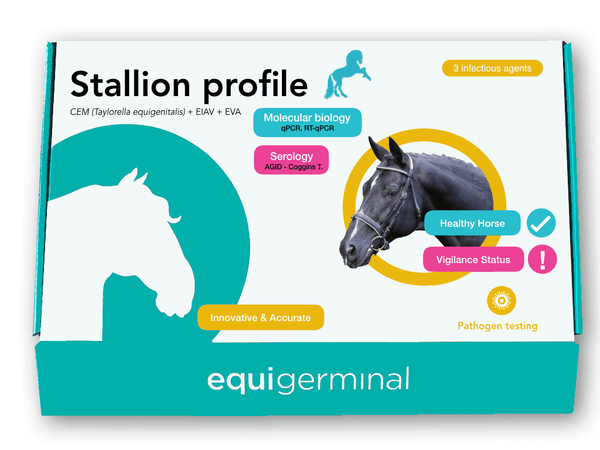
    Breeding stallion profile includes 3 accredited tests:  Coggins test for Equine Infectious Anemia (EIA), AGID (accredited test) Equine Viral Arteritis (EVA) test by RT-qPCR Taylorella equigenitalis (CEMO),test by qPCR Sample requirements Test Sample type Collection Volume (mL) Coggins test Serum/ Whole blood Serum tubes 1 EVA PCR EDTA blood K3 EDTA tube  1 CEMO PCR 3 genital swabs (foreskin, urethra, glans fossa) Synthetic swab without media N.A Turnaround time 2 to 5  working days

    1.154,00 kr

  • Breeding mare profile - Equigerminal

    Breeding mare profile

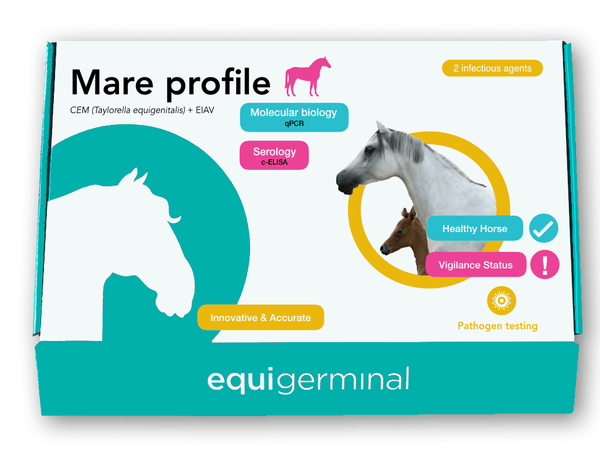
    Breeding mare Profile includes 2 tests:  Coggins Test (accredited test for AIE) Taylorella equigenitalis (CEMO) testing by qPCR Sample requirements Test Sample type Collection Volume (mL) Coggins test Serum/ Whole blood Serum tubes 1 EVA PCR EDTA blood K3 EDTA tube  1 CEMO PCR 2 genital swabs: clitoral fossa and clitoral sinuses Synthetic swab without media N.A   Turnaround time 2 to 5  working days

    866,00 kr

  • Equine Infectious Anemia, ELISA - Equigerminal Equine Infectious Anemia, ELISA - Equigerminal

    Equine Infectious Anemia, ELISA

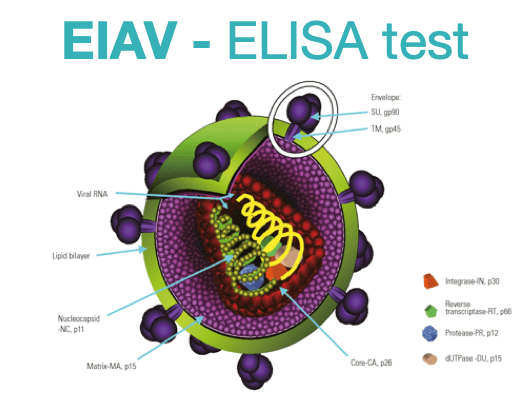
      Pathogen test  The ELISA test it can, in some cases, replace the Coggins Test, the official test required for trade/import/ export of horses. PTE018/2 ELISA test to detect antibodies against equine infectious anemia virus   Equine Infectious Anaemia is a disease listed in the OIE Terrestrial Animal Health Code and countries are obligated to report the occurrence of the disease according to the OIE Code. Sample 5 mL of blood collected in a dry tube or 2 mL of sera.   Turnaround time Standard processing - Results in 2-5 working days after sample arrival at the laboratory. Clients organise and support the costs of sending the samples to the laboratory. PREMIUM processing - Results in 5 hours after sample arrival. Includes free express delivery** . The laboratory organises Express shipping with pick-up of the package at the client's address and delivery at the laboratory. ** PREMIUM SERVICES INCLUDE AN EXPRESS SHIPPING DELIVERY FOR EUROPEAN COUNTRIES FROM NON REMOTE REGIONS. Check here to know if you are in a remote European region. For remote regions EXTRA fees are applied.  What is Equine Infectious Anemia? Equine infectious anemia is a very old viral disease that affects horses, asses, mules and hinnies worldwide. It is subject to tight controls in the import/export of live equines and their products Clinical signs This infection may have an acute, chronic or sub-clinical (silent) phase. The acute phase characterised by intermittent fever associated with depression, lethargy, increased heart and breathing rates, haemorrhaging, diarrhoea with blood, bleeding wounds that won’t heal, lack of coordination and rapid weight loss. It can also cause petechial haemorrhages of the mucous membranes and general oedema more evident in the legs and jaundice. The chronic phase characterised by recurrent episodes of fever, anaemia and thrombocytopenia (decrease of blood platelets) interspersed with periods of normality. These episodes will be spread out over time. This disease is often fatal during the acute or chronic phase. Should the animal survive the acute and chronic phase, it enters a silent phase with no evident signs of illness for the remainder of its life. In this silent phase the virus persists but the clinical signs are only manifest if the immune system is weakened by another disease, stress or the administration of corticosteroids. Transmission EIA is caused by a lentivirus of the HIV family, the equine infectious anaemia virus. The virus can be passed from one horse to another through fly, or more rarely, mosquito bites, or by direct contact with blood or blood derivative products (serum and/or plasma). Such as, for example, by: sharing objects contaminated with infected blood (needles, branding tools, etc). The virus can also be passed down from mare to foal via the placenta or, more rarely, in the mother’s colostrum or milk. Potentially, the virus can be transmitted by semen. Prevention There is no treatment, cure or vaccine for this infection. Prevention is crucial to avoid it being passed on. Serological tests for EIA must be done for any horse with anaemia and thrombocytopenia of unknown origin. Regular tests must be done on a yearly basis to keep the holding free from EIA. It is advisable to test studs and brood mares every 90 days in the breeding period.    

    235,00 kr - 516,00 kr

  • Equine Infectious Anemia, RT-qPCR - Equigerminal

    Equine Infectious Anemia RTqPCR

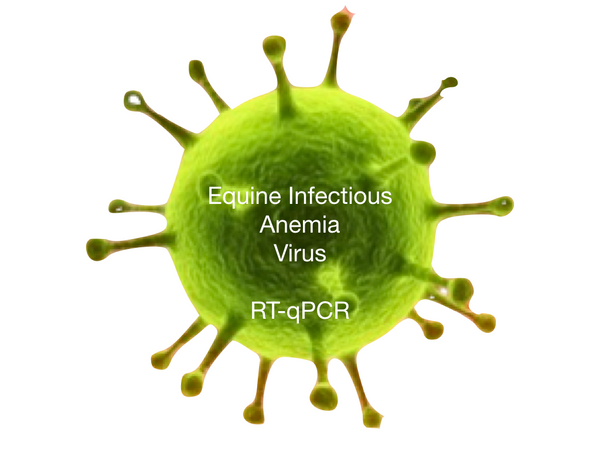
    Pathogen test  The RT-qPCR test detects the genome (RNA) of the Equine Infectious Anaemia Virus (EIAV). This method is used when there are positive/conflicting results on serologic tests. Confirmation of early infection, before serum antibodies to EIAV develop. Equine Infectious Anaemia is a disease listed in the OIE Terrestrial Animal Health Code and countries are obligated to report the occurrence of the disease according to the OIE Code. Sample 5 mL - blood - K3 EDTA tube 1 mL - frozen semen or others Turnaround time 2 to 5 working days   What is Equine Infectious Anemia? Equine infectious anemia is a very old viral disease that affects horses, asses, mules and hinnies worldwide. It is subject to tight controls in the import/export of live equines and their products Clinical signs This infection may have an acute, chronic or sub-clinical (silent) phase. The acute phase characterised by intermittent fever associated with depression, lethargy, increased heart and breathing rates, haemorrhaging, diarrhoea with blood, bleeding wounds that won’t heal, lack of coordination and rapid weight loss. It can also cause petechial haemorrhages of the mucous membranes and general oedema more evident in the legs and jaundice. The chronic phase characterised by recurrent episodes of fever, anaemia and thrombocytopenia (decrease of blood platelets) interspersed with periods of normality. These episodes will be spread out over time. This disease is often fatal during the acute or chronic phase. Should the animal survive the acute and chronic phase, it enters a silent phase with no evident signs of illness for the remainder of its life. In this silent phase the virus persists but the clinical signs are only manifest if the immune system is weakened by another disease, stress or the administration of corticosteroids. Transmission EIA is caused by a lentivirus of the HIV family, the equine infectious anaemia virus. The virus can be passed from one horse to another through fly, or more rarely, mosquito bites, or by direct contact with blood or blood derivative products (serum and/or plasma). Such as, for example, by: sharing objects contaminated with infected blood (needles, branding tools, etc). The virus can also be passed down from mare to foal via the placenta or, more rarely, in the mother’s colostrum or milk. Potentially, the virus can be transmitted by semen. Prevention There is no treatment, cure or vaccine for this infection. Prevention is crucial to avoid it being passed on. Serological tests for EIA must be done for any horse with anaemia and thrombocytopenia of unknown origin. Regular tests must be done on a yearly basis to keep the holding free from EIA. It is advisable to test studs and brood mares every 90 days in the breeding period.

    469,00 kr

  • Anaplasma phagocytophilum, qPCR - Equigerminal

    Anaplasma phagocytophilum, qPCR

     Pathogen test  The qPCR test detects the genome (DNA) of Anaplasma phagocytophilum, the bacterium (formerly known as Ehrlichia phagocytophila and Ehrlichia equi)  responsible for the Equine Anaplasmosis. Sample 5 mL - blood - K3 EDTA tube Turnaround time 2 to 5 working days   What is Equine Anaplasmosis? Anaplasmosis is a tick-borne disease caused by the bacterium Anaplasma phagocytophilum that infects white blood cells. The disease is transmitted by ticks. The risk of transmission to people is unclear at this time. Although horses and people appear to be infected with strains of the same bacteria, it is believed that people also acquire the infection from tick bites, and not directly from infected horses. Clinical signs The severity of signs varies with the age of the animal and duration of the illness. Signs may be mild. Horses less than 1 year old may have a fever only; horses 1 to 3 years old develop fever, depression, mild limb swelling, and lack of coordination. Adults exhibit the characteristic signs of fever, poor appetite, depression, reluctance to move, limb swelling, and jaundice. Fever is highest during the first 1 to 3 days of infection, but may last for 6 to 12 days. Signs become more severe over several days. Any existing infection (such as a leg wound or respiratory infection) can be made worse. Transmission The disease is transmitted by ticks. Immature ticks pick up the bacterium from rodents who serve as reservoirs, maintain it as they mature, and then transmit it to the horse they feed off of as adults. It is unknown how long the tick has to be attached before transmission occurs. It takes approximately 2-3 weeks after disease transmission for the horse to develop clinical signs of Anaplasmosis, meaning that by the time signs are noticed the tick is long gone. Phagocytophilum organisms infect neutrophils and eosinophils in the blood. Prevention The disease is easily treated in the early stages using appropriate antibiotics. The severity of the disease is variable; many horses recover after 14 days without treatment. However, rare fatalities have occurred that are believed to be associated with secondary infections. Horses with severe signs and neurologic signs may benefit from injectable corticosteroids. Recovered horses develop immunity for at least 2 years and are not carriers. Tick control measures are mandatory for control of the disease. There is no vaccine.

    422,00 kr

  • Leptospira interrogans, qPCR - Equigerminal

    Leptospira interrogans qPCR

    Pathogen test  The PCR test detects the genome (DNA) of Leptospira interrogans, the pathogen responsible for Leptospirosis. Sample 5 mL - blood - K3 EDTA tube Turnaround time 2 to 5 working days   What is Leptospirosis? Leptospirosis is a bacterial infection that can result in abortion, chronic uveitis, and/or kidney failure in horses and can also infect humans,  pets, and other livestock. Clinical signs Some horses with leptospirosis appear completely normal. Others might show generalised flulike signs. More serious cases present as mid- to late-term abortions, chronic uveitis (an eye disease that’s the leading cause of blindness in horses), or renal (kidney) disease. Foals from infected dams born alive might suffer from malnutrition, jaundice, pulmonary haemorrhage, or severe respiratory distress—all of which can be fatal. If you can start treatment immediately—before the infection damages eyes or organs—horses with leptospirosis generally have good prognoses. And, you can protect the rest of your herd (and yourself and other animals) by isolating infected horses, treating your other horses with preventive antibiotics or, depending on the species involved, vaccinating. Transmission Leptospirosis is caused by spiral-shaped bacteria called spirochetes, specifically leptospires, that enter an animal’s body through mucous membranes in areas such as the nostrils, lips, eyes, trachea, stomach, genitals, or anus, or through broken skin. In addition to mammals (horses, humans, squirrels, voles, and scores more), amphibians (such as frogs) and reptiles (including snakes) can become infected with and pass on the disease-causing bacteria. In horses, foals can become infected in utero. Leptospires most commonly live and multiply in the renal tubules (where urine collects in the kidneys) of reservoir or carrier hosts such as rodents, wildlife, and domestic animals. In addition to spreading in urine, leptospires can be transmitted via infected blood or tissues or by infected urine splashing into eyes or the mouth. When an infected reservoir host urinates, the leptospires pass out of its body in the urine and contaminate the surrounding ground and/or water. In fact, exposure to standing water, such as ponds or floodwaters, is the biggest risk factor for leptospirosis infection. Occasionally, says Carter, animals (horses, livestock, etc.) inhale leptospires, ingest them with feed, or transmit them via wounds or bites. Prevention Humans who work with animals or have frequent exposure to them are at a higher risk of contracting leptospirosis. The leptospirosis is now classified as a re-emerging disease. Worldwide, the incidence is increasing, which may be due to increased episodes of flooding. According to the CDC, most human leptospirosis symptoms are flulike and include: high fever; headache; chills; muscle aches; vomiting; jaundice (yellow skin and eyes); red eyes; and abdominal pain. Treatment is fairly straightforward. The emphasis now is on rapid diagnostics so the disease can be diagnosed quickly and treatment started. Prevention is characterised differently for different risk groups. For occupational exposure (for example, veterinarians and animal caretakers that might be exposed to the disease), appropriate PPE (personal protective equipment, including protective gloves and glasses) is important. For recreational exposure, preventing contact of mucous membranes and broken skin with contaminated water is advised.

    422,00 kr

  • Borrelia burgdorferi, qPCR - Equigerminal

    Borrelia burgdorferi, qPCR

    Pathogen test  The PCR test detects the genome (DNA) of  Borrelia burgdorferi, the pathogen responsible for the Lyme disease or Borreliose. For animals with clinical signs. Sample 5 mL - blood - K3 EDTA tube Turnaround time 2 to 5 working days   What is Lyme disease? Lyme disease is a tickborne illness that results from infection with members of the Borrelia burgdorferi sensu lato complex. These organisms are maintained in wild animals, but they can affect humans and some species of domesticated animals, like horses. Lyme disease has been reported in North America, Europe, Australia and parts of Asia. Clinical signs Clinical signs appear in less than 10% of horses infected with the bacteria. Signs include: Lameness (usually of larger joints) that shifts from limb to limb; Generalised stiffness; Soreness in the large joints and back; Low-grade fever (which may or may not be present); Behavioural changes such as reluctance to work and irritability; Laminitis (occasionally associated with Lyme disease) Horses do not show a skin rash with Lyme disease. Swelling around a tick bite in a horse is generally due to a reaction to the tick’s saliva, not Lyme disease. Transmission The ticks become infected when they feed on rodents such as the white-footed mouse that carry the bacteria. The tick can then pass on this infection when it feeds on another host, such as a horse or deer. The bacteria migrate from the tick to the horse after 12 to 24 hours of attachment. In areas where the incidence of disease is high among people, only about 50% of horses are likely to become infected. Of these horses, less than 1 in 10 develops clinical signs of the disease. The remaining horses either have subclinical infection (carry the antibodies against the bacteria but remain clinically healthy) or their immune systems fight off the bacteria (and these horses carry the antibodies to Lyme disease for up to a year). People can also be infected with Lyme disease, but there is no risk of the disease being transmitted from horses to humans. Prevention Since there is no vaccine available, prevention is focused on control of the tick population: Perform a daily tick examination. Remember that it takes 12 to 24 hours of attachment for bacteria to migrate from the tick to the host. Treat turned out horses with permethrin-based insect repellents during peak adult deer tick seasons: early spring, late summer, and fall. Minimize habitat for ticks and their hosts.  

    422,00 kr

Login

Forgot your password?

Don't have an account yet?
Create account