5 products

  • Family portrait of a dog family with mother, father, and puppy, ideal candidates for paternity testing Family portrait of a dog family with mother, father, and puppy, ideal candidates for paternity testing

    equigerminal Canine DNA Profiling and Parentage Analysis

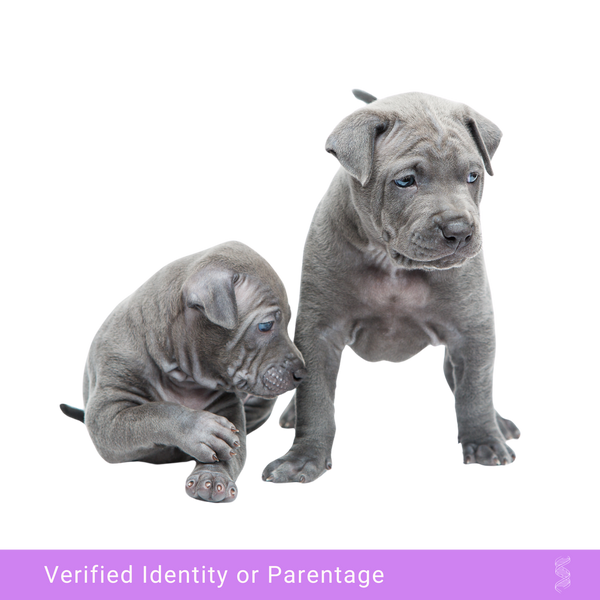
    Canine DNA Profiling and Parentage Analysis Introduction Ordering and utilizing our canine genetic tests is a straightforward process designed to provide you with valuable insights into your dog's health and lineage. Simply follow the instructions provided in the kit to collect a DNA sample from your dog and send it back to our laboratory for analysis. Benefits Verified Parentage: Understand your dog's unique genetic heritage and confirm their parentage, ensuring their pedigree. Verified Identity: Secure a unique genetic ID for your dog, invaluable for breeders, registration, and in case of loss. Procedure Follow the instructions provided in the kit to collect a DNA sample from your dog and send it back to our laboratory for analysis. Results Results are typically available within 2-3 weeks and include a detailed report on the genetic status of your dog. FAQs How do I collect the sample? Follow the instructions provided in the kit to collect a DNA sample. How long does it take to get results? Results are typically available within 2-3 weeks from the time we receive the sample. What should I do if my dog tests positive for a genetic predisposition? If your dog tests positive, consult with your veterinarian to create a management plan tailored to your dog's needs.

    €50.00 - €130.00

  • SARS-CoV-2 antibody testing for Dogs - Equigerminal

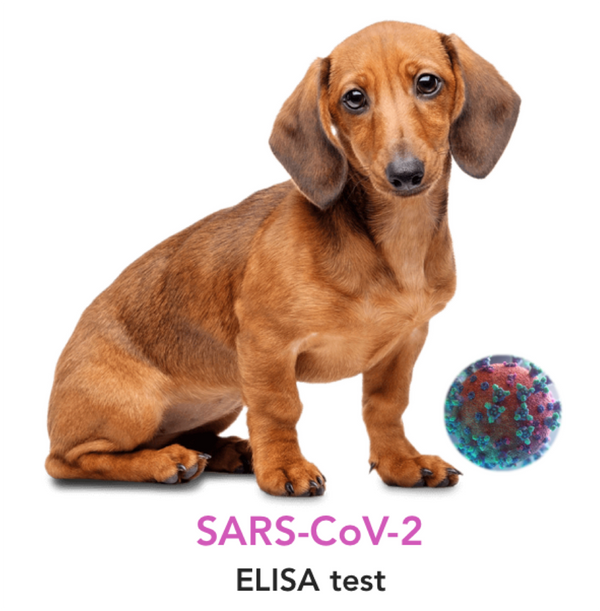
    Canine COVID19 Antibody

    Protect your pets from SARS-CoV-2 infection Dogs are susceptible to SARS-CoV-2 by a reverse zoonosis. If you have COVID-19 you can infect your pets. Our team confirmed this finding in a seroepidemiologic survey* of cats and dogs in Portugal and found antibodies against SARS-CoV-2 in 15/69 (21.74%) cats and 7/148 (4.73%) dogs.  By performing this test will allow you to know if your Dog has been infected with SARS-CoV-2. This test detects IgG antibodies against SARS-CoV-2 Nucleoprotein (NP)  and Spike (S) protein.  Please note, that IgG antibodies arise 2-3 weeks after infection and are maintained for some months.  As in people, animals often have mild clinical signs, or are asymptomatic, but there are also reports of fatal cases.  Sample  2 mL blood in a dry tube or 1 mL of sera. Turnaround time  Standard processing - Results in 2-5 working days after sample arrival at the laboratory. Clients organise and support the costs of sending the samples to the laboratory. PREMIUM processing - Results in 5 hours after sample arrival. Includes free express delivery** . The laboratory organises Express shipping with pick-up of the package at the client's address and delivery at the laboratory. ** PREMIUM SERVICES INCLUDE AN EXPRESS SHIPPING DELIVERY FOR EUROPEAN COUNTRIES FROM NON REMOTE REGIONS. Check here to know if you are in a remote European region. For remote regions EXTRA fees are applied.    References *Barroso, R., Vieira-Pires, A., Antunes, A., & Fidalgo-Carvalho, I. (2022). Susceptibility of Pets to SARS-CoV-2 Infection: Lessons from a Seroepidemiologic Survey of Cats and Dogs in Portugal. Microorganisms, 10(2), 345. https://doi.org/10.3390/microorganisms10020345

    €30.00

  • SARS-CoV-2 molecular testing for Dogs - Equigerminal

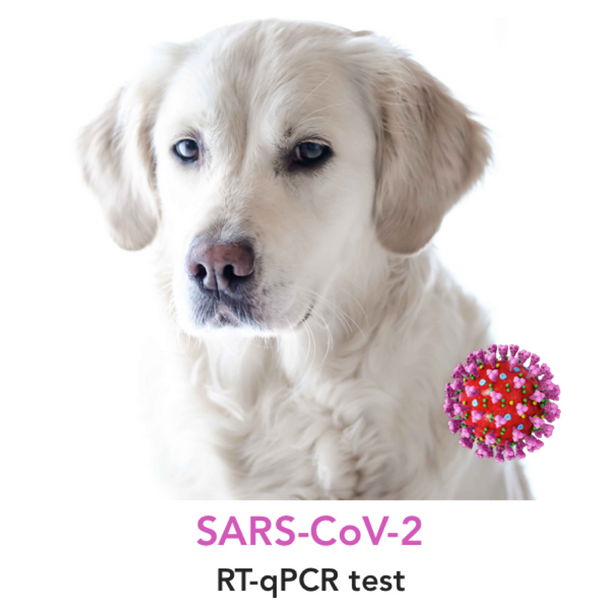
    Canine COVID19 Molecular

    Protect your pets from SARS-CoV-2 infection Dogs are susceptible to SARS-CoV-2 by reverse zoonosis. If you're infected with COVID-19, you can infect your pets. Our team confirmed in a seroepidemiologic survey* of cats and dogs in Portugal and found antibodies against SARS-CoV-2 in 15/69 (21.74%) cats and 7/148 (4.73%) dogs. By performing this test will allow you to know if your Dog is infected with SARS-CoV-2. This test detects viral RNA of SARS-CoV-2 by RTqPCR. Please note that viral RNA is detectable only in the first two weeks after infection.  Molecular test  Reference laboratory diagnostic tests for SARS-CoV-2 are carried out by means of genome amplification tests (RNA) in a polymerase chain reaction in real time, preceded by reverse transcription (rRT-PCR).   Sample type Exudate from the nasopharyngeal and oropharyngeal collected through a swab and/or rectal swabs.   Turnaround time Standard processing - Results in 2-5 working days after sample arrival at the laboratory. Clients organise and support the costs of sending the samples to the laboratory. PREMIUM processing - Results in 24 hours after sample arrival. Includes free express delivery** . The laboratory organises Express shipping with pick-up of the package at the client's address and delivery at the laboratory. ** PREMIUM SERVICES INCLUDE AN EXPRESS SHIPPING DELIVERY FOR EUROPEAN COUNTRIES FROM NON REMOTE REGIONS. Check here to know if you are in a remote European region. For remote regions EXTRA fees are applied.    Timeline of the SARS-CoV-2 infection in a Dog in a COVID19+ household.     From the diagnosis of COVID-19 in the dog owners (22 January 2021) to the first and second positive RT-qPCR test of the dog on 29 January 2021 and 4 February 2021, respectively, and the positive ELISA test on 14 February 2021, 16 days after the first positive RT-qPCR test. The green color means positive serological or molecular result and the red color means a negative serological or molecular result. The date corresponds to the day of the blood or swab sampling from the dog.   FAQs Why should we test dogs ? The test should be done in dogs who have had contact with confirmed cases of COVID-19. There are confirmed cases of infections of dogs by SARS-CoV-2 through transmission of the virus by humans. However, the viral load retrieved in dogs is considered low. For more info check the OIE website When dogs should take the test? In general, the test can be performed 5 to 14 days after contact with confirmed cases of COVID-19.   The test it is based on the detection of the SARS-CoV-2 genome (RNA) by real-time rRT-PCR techniques in exudates from the nasopharynx and oropharynx. In human the viral load is higher in the first days of infection and starts to decrease after 15 days after infection. What is the specificity and sensitivity of these tests? The real-time RT-PCR test used is 100% specific and does not cross-react with other human coronaviruses. For molecular diagnosis, we use two different SARS-CoV-2 proteins as targets.The sensitivity of the molecular test depends on the viral load present in the sample. The viral load is maximal 5-7 days after infection and from then on it starts to decrease, becoming diminished 15 days after infection. References *Barroso, R., Vieira-Pires, A., Antunes, A., & Fidalgo-Carvalho, I. (2022). Susceptibility of Pets to SARS-CoV-2 Infection: Lessons from a Seroepidemiologic Survey of Cats and Dogs in Portugal. Microorganisms, 10(2), 345. https://doi.org/10.3390/microorganisms10020345

    €65.00

  • SARS-CoV-2 antibody testing for Cats - Equigerminal

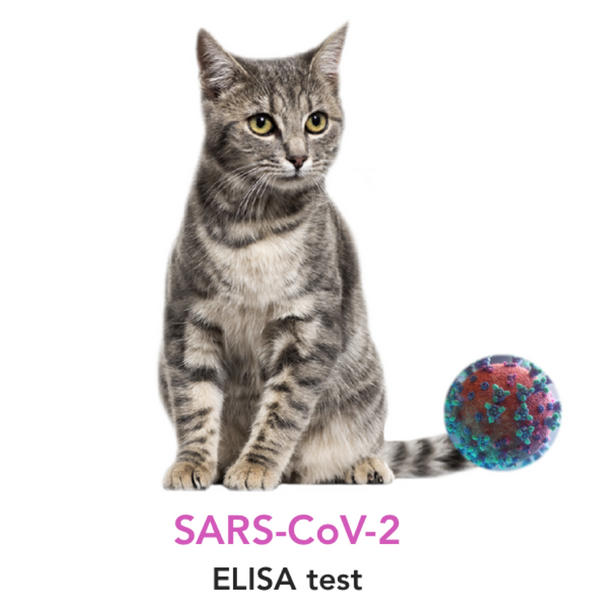
    Feline COVID19 Antibody

    Protect your pets from SARS-CoV-2 infection Cats are susceptible to SARS-CoV-2 by a reverse zoonosis. If you have COVID-19 you can infect your pets. Our team confirmed this finding in a seroepidemiologic survey* of cats and dogs in Portugal and found antibodies against SARS-CoV-2 in 15/69 (21.74%) cats and 7/148 (4.73%) dogs.  For more information check our peer reviewed publication at micro-organism (MDPI).  As in people, animals often have mild clinical signs, or are asymptomatic, but there are also reports of fatal cases.  Why testing By performing this test will allow you to know if your Cat has been infected with SARS-CoV-2. This test detects IgG antibodies against SARS-CoV-2 Nucleoprotein (NP)  and Spike (S) protein.  Please note, that IgG antibodies arise 2-3 weeks after infection and are maintained for some months.    Sample  2 mL blood in a dry tube or 1 mL of sera. Turnaround time  Standard processing - Results in 2-5 working days after sample arrival at the laboratory. Clients organise and support the costs of sending the samples to the laboratory. PREMIUM processing - Results in 5 hours after sample arrival. Includes free express delivery** . The laboratory organises Express shipping with pick-up of the package at the client's address and delivery at the laboratory. ** PREMIUM SERVICES INCLUDE AN EXPRESS SHIPPING DELIVERY FOR EUROPEAN COUNTRIES FROM NON REMOTE REGIONS. Check here to know if you are in a remote European region. For remote regions EXTRA fees are applied.    References *Barroso, R., Vieira-Pires, A., Antunes, A., & Fidalgo-Carvalho, I. (2022). Susceptibility of Pets to SARS-CoV-2 Infection: Lessons from a Seroepidemiologic Survey of Cats and Dogs in Portugal. Microorganisms, 10(2), 345.  https://doi.org/10.3390/microorganisms10020345  Main conclusions of the study:  - Cats that lived in COVID-19 positive households are at more risk to be infected with SARS-CoV-2  and some cats can become ill or may die.  - Cat to cat transmission of SARS-CoV-2 is also a possibility. Cat that lived in COVID-19 negative households but lived in free range and contact with other cats also tested positive.  - If you test COVID-19 positive please avoid direct contact with your cat, or ware a mask.  - Serological testing should be performed  2-3 weeks after contact with a COVID-19 positive case.   - One to 2 weeks after contact with a COVID-19 positive case a molecular RT-qPCR is recommended. Please check more info about molecular tests for cats here .  For more information please check the coverage article of our scientific publication written by an independent professional. If you would like to collaborate and participate in our study, please contact us at support@equigerminal.pt to find out if you qualify for the study and receive free testing for SARS-CoV-2.  

    €30.00

  • SARS-CoV-2 molecular testing for Cats - Equigerminal

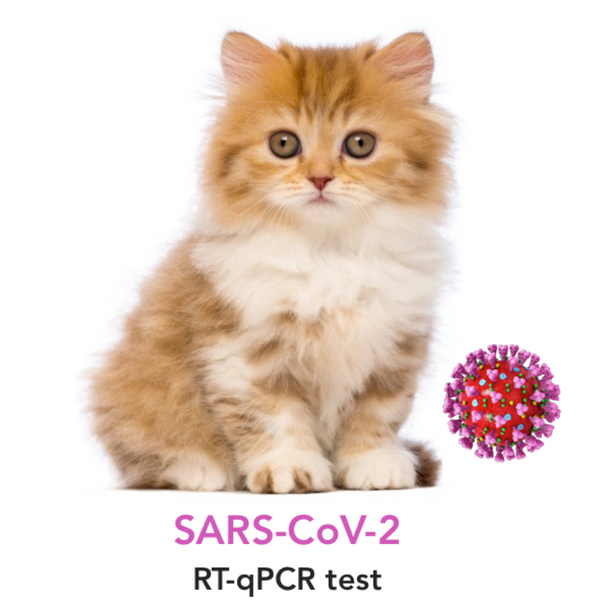
    Feline COVID19 Molecular

    Protect your pets from SARS-CoV-2 infection Cats are susceptible to SARS-CoV-2 by reverse zoonosis. If you're infected with COVID-19, you can infect your pets.Our team confirmed in a seroepidemiologic survey* of cats and dogs in Portugal and found antibodies against SARS-CoV-2 in 15/69 (21.74%) cats and 7/148 (4.73%) dogs. By performing this test will allow you to know if your Cat is infected with SARS-CoV-2. This test detects viral RNA of SARS-CoV-2 by RTqPCR. Please note that viral RNA is detectable only in the first two weeks after infection.  Molecular test  Reference laboratory diagnostic tests for SARS-CoV-2 are carried out by means of genome amplification tests (RNA) in a polymerase chain reaction in real time, preceded by reverse transcription (rRT-PCR). Sample type Exudate from the nasopharyngeal and oropharyngeal collected through a swab and/or rectal swabs.   Turnaround time Standard processing - Results in 2-5 working days after sample arrival at the laboratory. Clients organise and support the costs of sending the samples to the laboratory. PREMIUM processing - Results in 24 hours after sample arrival. Includes free express delivery** . The laboratory organises Express shipping with pick-up of the package at the client's address and delivery at the laboratory. ** PREMIUM SERVICES INCLUDE AN EXPRESS SHIPPING DELIVERY FOR EUROPEAN COUNTRIES FROM NON REMOTE REGIONS. Check here to know if you are in a remote European region. For remote regions EXTRA fees are applied.    FAQs Why should we test cats ? The test should be done in cats who have had contact with confirmed cases of COVID-19. There are confirmed cases of infections of cats by SARS-CoV-2 through transmission of the virus by humans or other infected cats.   For more info check  the OIE website When cats should take the test? In general, the test can be performed 5 to 14 days after contact with confirmed cases of COVID-19.   The test it is based on the detection of the SARS-CoV-2 genome (RNA) by real-time rRT-PCR techniques in exudates from the nasopharynx, oropharynx and rectal swabs. In dogs the viral load is higher in the first days of infection and starts to decrease after 15 days after infection.   What is the specificity and sensitivity of these tests? The real-time RT-PCR test used is 100% specific and does not cross-react with other animal coronaviruses. For molecular diagnosis, we use two different SARS-CoV-2 genes as targets.The sensitivity of the molecular test depends on the viral load present in the sample. The viral load is maximal 5-7 days after infection and from then on it starts to decrease, becoming diminished 15 days after infection.   References *Barroso, R., Vieira-Pires, A., Antunes, A., & Fidalgo-Carvalho, I. (2022). Susceptibility of Pets to SARS-CoV-2 Infection: Lessons from a Seroepidemiologic Survey of Cats and Dogs in Portugal. Microorganisms, 10(2), 345. https://doi.org/10.3390/microorganisms10020345

    €65.00

© 2026 Equigerminal, Powerd by Shopify

    • American Express
    • Apple Pay
    • Bancontact
    • Google Pay
    • iDEAL Wero
    • Maestro
    • Mastercard
    • Multibanco
    • Multibanco
    • PayPal
    • Shop Pay
    • Union Pay
    • Visa

    Login

    Forgot your password?

    Don't have an account yet?
    Create account