112 products

  • Equine uterine culture - Equigerminal

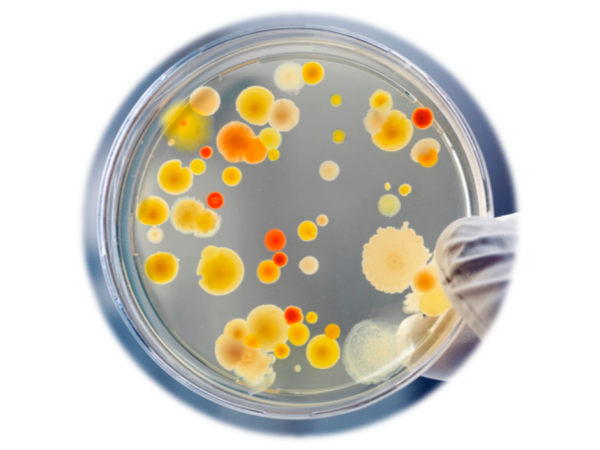
    Equine uterine culture

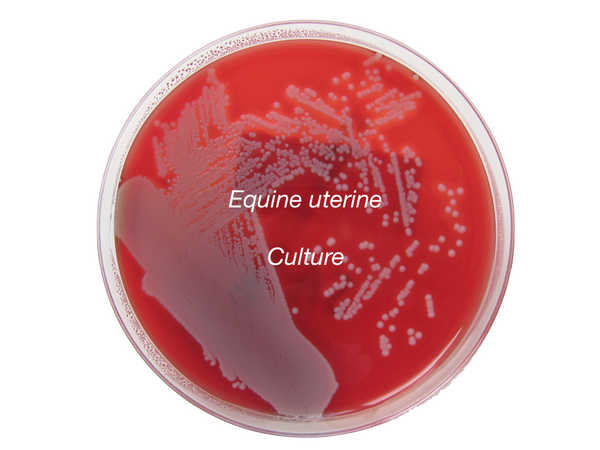
    Parameter Culture of the uterus  Sample Uterine swab in special culture transport system Turnaround time 1-15 day for bacterial growth Several days (>15) for yeast and other fungal growth 

    €39.43

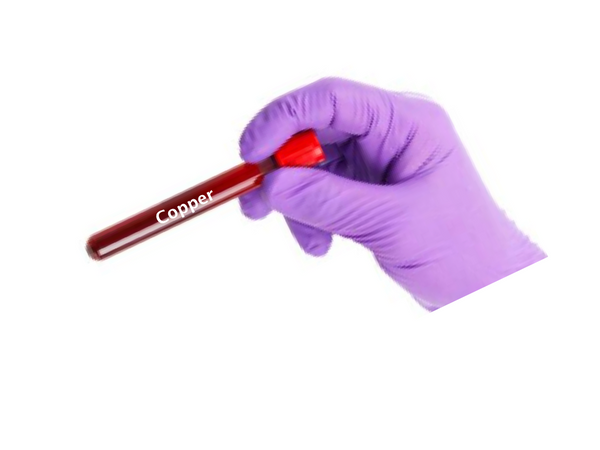
  • Copper - Equigerminal

    Copper

    Parameter Copper  Sample 5 mL - blood - serum tube   Turnaround time 2 to 5 working days

    €11.99

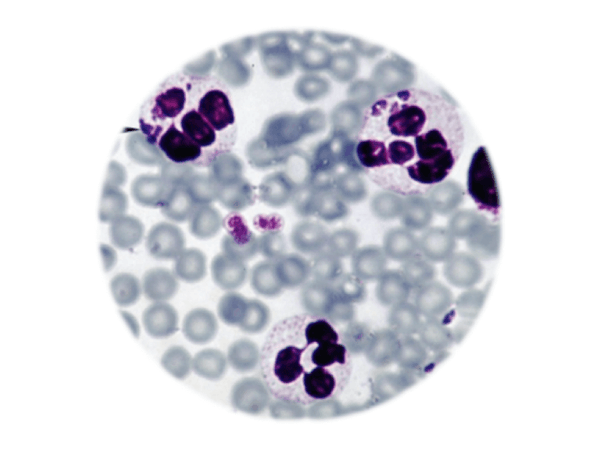
  • Anaplasma phagocytophilum, IFAT - Equigerminal

    Anaplasma phagocytophilum/ Erlichiosis by IFAT

    Anaplasma phagocytophilum / Erlichiosis test by IFAT the bacterium (formerly known as Ehrlichia phagocytophila and Ehrlichia equi)  responsible for the Equine Anaplasmosis. Sample5 mL of blood in a serum tube Turnaround time2 to 5 working daysWhat is Equine Anaplasmosis?Anaplasmosis is a tick-borne disease caused by the bacterium Anaplasma phagocytophilum that infects white blood cells. The disease is transmitted by ticks. The risk of transmission to people is unclear at this time.Although horses and people appear to be infected with strains of the same bacteria, it is believed that people also acquire the infection from tick bites, and not directly from infected horses. Clinical signsThe severity of signs varies with the age of the animal and duration of the illness. Signs may be mild.Horses less than 1 year old may have a fever only; horses 1 to 3 years old develop fever, depression, mild limb swelling, and lack of coordination.Adults exhibit the characteristic signs of fever, poor appetite, depression, reluctance to move, limb swelling, and jaundice.Fever is highest during the first 1 to 3 days of infection, but may last for 6 to 12 days. Signs become more severe over several days.Any existing infection (such as a leg wound or respiratory infection) can be made worse. TransmissionThe disease is transmitted by ticks.Immature ticks pick up the bacterium from rodents who serve as reservoirs, maintain it as they mature, and then transmit it to the horse they feed off of as adults. It is unknown how long the tick has to be attached before transmission occurs.It takes approximately 2-3 weeks after disease transmission for the horse to develop clinical signs of Anaplasmosis, meaning that by the time signs are noticed the tick is long gone.Phagocytophilum organisms infect neutrophils and eosinophils in the blood. PreventionThe disease is easily treated in the early stages using appropriate antibiotics.The severity of the disease is variable; many horses recover after 14 days without treatment. However, rare fatalities have occurred that are believed to be associated with secondary infections.Horses with severe signs and neurologic signs may benefit from injectable corticosteroids.Recovered horses develop immunity for at least 2 years and are not carriers.Tick control measures are mandatory for control of the disease.There is no vaccine.

    €55.17

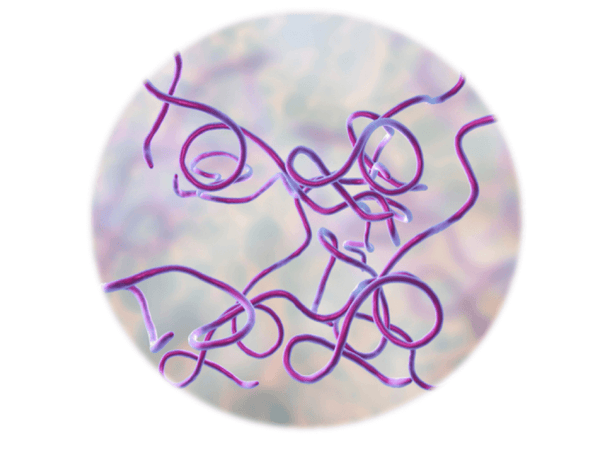
  • Leptospira, MAT - Equigerminal

    Leptospira MAT

    Pathogen test The microscopic agglutination test (MAT) is the reference test method for the serodiagnosis of leptospirosis both in humans and in animals (World Health Organization (WHO), 2003; World Organisation for Animal Health (OIE, 2008). This test detects antibodies to specific serovars using live leptospiral antigens, and can be performed on serum from any species. Sample5 mL - blood - serum tube Turnaround time2 to 5 working days What is Leptospirosis?Leptospirosis is a bacterial infection that can result in abortion, chronic uveitis, and/or kidney failure in horses and can also infect humans, pets, and other livestock. Clinical signsSome horses with leptospirosis appear completely normal. Others might show generalised flulike signs.More serious cases present as mid- to late-term abortions, chronic uveitis (an eye disease that’s the leading cause of blindness in horses), or renal (kidney) disease.Foals from infected dams born alive might suffer from malnutrition, jaundice, pulmonary haemorrhage, or severe respiratory distress—all of which can be fatal. If you can start treatment immediately—before the infection damages eyes or organs—horses with leptospirosis generally have good prognoses. And, you can protect the rest of your herd (and yourself and other animals) by isolating infected horses, treating your other horses with preventive antibiotics or, depending on the species involved, vaccinating. TransmissionLeptospirosis is caused by spiral-shaped bacteria called spirochetes, specifically leptospires, that enter an animal’s body through mucous membranes in areas such as the nostrils, lips, eyes, trachea, stomach, genitals, or anus, or through broken skin. In addition to mammals (horses, humans, squirrels, voles, and scores more), amphibians (such as frogs) and reptiles (including snakes) can become infected with and pass on the disease-causing bacteria. In horses, foals can become infected in utero.Leptospires most commonly live and multiply in the renal tubules (where urine collects in the kidneys) of reservoir or carrier hosts such as rodents, wildlife, and domestic animals. In addition to spreading in urine, leptospires can be transmitted via infected blood or tissues or by infected urine splashing into eyes or the mouth.When an infected reservoir host urinates, the leptospires pass out of its body in the urine and contaminate the surrounding ground and/or water. In fact, exposure to standing water, such as ponds or floodwaters, is the biggest risk factor for leptospirosis infection. Occasionally, says Carter, animals (horses, livestock, etc.) inhale leptospires, ingest them with feed, or transmit them via wounds or bites. PreventionHumans who work with animals or have frequent exposure to them are at a higher risk of contracting leptospirosis.The leptospirosis is now classified as a re-emerging disease. Worldwide, the incidence is increasing, which may be due to increased episodes of flooding. According to the CDC, most human leptospirosis symptoms are flulike and include: high fever; headache; chills; muscle aches; vomiting; jaundice (yellow skin and eyes); red eyes; and abdominal pain.Treatment is fairly straightforward. The emphasis now is on rapid diagnostics so the disease can be diagnosed quickly and treatment started.Prevention is characterised differently for different risk groups. For occupational exposure (for example, veterinarians and animal caretakers that might be exposed to the disease), appropriate PPE (personal protective equipment, including protective gloves and glasses) is important. For recreational exposure, preventing contact of mucous membranes and broken skin with contaminated water is advised.

    €67.48

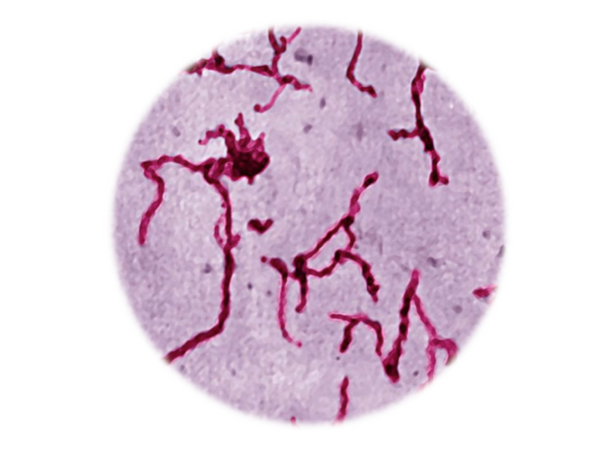
  • Borrelia burgdorferi, IFAT - Equigerminal

    Borrelia burgdorferi, IFAT

    Pathogen test  IFAT  for Borrelia burgdorferi, the pathogen responsible for the Lyme disease or Borreliose. IgG + IgM IgG titers of 1:64 are considered doubtful, IgG titers of 1:128 and higher are considered positive in the sense of an infection that has occurred. Recent infections appear with a positive IgM titer, but may be IgG negative. Sample 5 mL - blood - serum tube Turnaround time 2 to 5 working days   What is Lyme disease? Lyme disease is a tickborne illness that results from infection with members of the Borrelia burgdorferi sensu lato complex. These organisms are maintained in wild animals, but they can affect humans and some species of domesticated animals, like horses. Lyme disease has been reported in North America, Europe, Australia and parts of Asia. Clinical signs Clinical signs appear in less than 10% of horses infected with the bacteria. Signs include: Lameness (usually of larger joints) that shifts from limb to limb; Generalised stiffness; Soreness in the large joints and back; Low-grade fever (which may or may not be present); Behavioural changes such as reluctance to work and irritability; Laminitis (occasionally associated with Lyme disease) Horses do not show a skin rash with Lyme disease. Swelling around a tick bite in a horse is generally due to a reaction to the tick’s saliva, not Lyme disease. Transmission The ticks become infected when they feed on rodents such as the white-footed mouse that carry the bacteria. The tick can then pass on this infection when it feeds on another host, such as a horse or deer. The bacteria migrate from the tick to the horse after 12 to 24 hours of attachment. In areas where the incidence of disease is high among people, only about 50% of horses are likely to become infected. Of these horses, less than 1 in 10 develops clinical signs of the disease. The remaining horses either have subclinical infection (carry the antibodies against the bacteria but remain clinically healthy) or their immune systems fight off the bacteria (and these horses carry the antibodies to Lyme disease for up to a year). People can also be infected with Lyme disease, but there is no risk of the disease being transmitted from horses to humans. Prevention Since there is no vaccine available, prevention is focused on control of the tick population: Perform a daily tick examination. Remember that it takes 12 to 24 hours of attachment for bacteria to migrate from the tick to the host. Treat turned out horses with permethrin-based insect repellents during peak adult deer tick seasons: early spring, late summer, and fall. Minimize habitat for ticks and their hosts.  

    €55.17

  • Equine Bronchoalveolar Lavage (BAL) Profile - Equigerminal

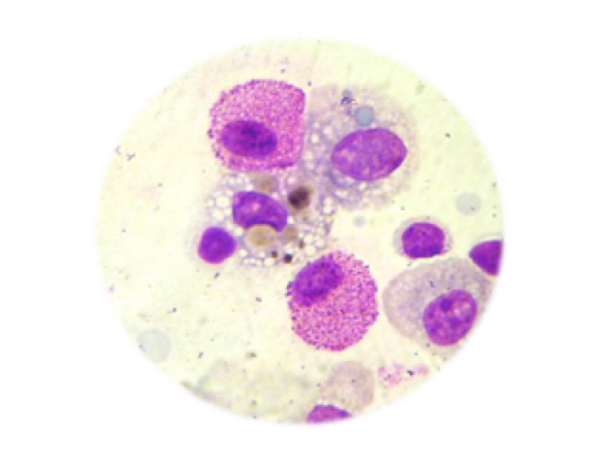
    Equine Bronchoalveolar Lavage (BAL) Profile

    Parameter Cytological, bacteriological and mycological analysis Antibiogram (if applied) Sample Equine Bronchoalveolar Lavage (BAL) Turnaround time 3-8 days

    €67.65

  • Complete culture test - Equigerminal

    Complete culture test

    Parameter Bacteriological and mycological culture Includes antibiogram (if applied) Sample Aspirates, fluids, solid tissues, swabs. Turnaround time 2-5 days

    €39.98

  • Parcelify Shipping: Free Shipping

    DO NOT DELETE THIS PRODUCT!This product is used by Parcelify to enable cart page shipping rates to customers. If you have questions or concerns, please contact support@parcelify.com

    €0.00

  • Comprehensive Allergy Panel

    Comprehensive Allergy Panel

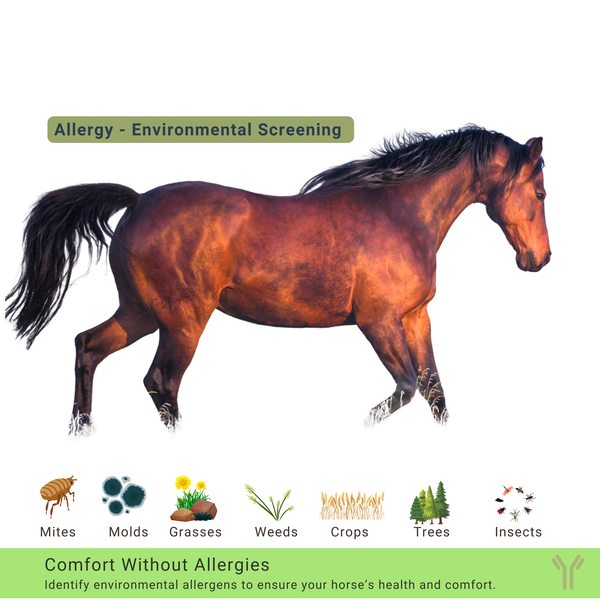
    About the Test – Comprehensive Allergy Panel The Comprehensive Allergy Panel evaluates sensitivity to a wide range of environmental and insect allergens in horses. Using advanced detection technologies, the test measures allergen-specific IgE with high precision and avoids cross-reactivity with IgG or CCDs (cross-reactive carbohydrate determinants). All results are interpreted using the HERBU scoring system, which provides clinically relevant categorization of IgE reactivity levels for each allergen. Why Test? Identifying specific allergens responsible for your horse's symptoms is essential for targeted allergy management. The Comprehensive Allergy Panel enables early detection and supports the development of effective treatment and prevention strategies, including immunotherapy. Benefits of the  Test Broad screening of European environmental and insect allergens. High sensitivity: detects specific IgE levels down to 10 pg per sample. Rapid turnaround: results in 2 to 7 working days. Results expressed according to the HERBU score, ensuring clinically meaningful interpretation. Specific for IgE only, with no interference from IgG or non-relevant cross-reactions. Special Considerations The test should not be performed during or immediately after anti-allergy treatments (e.g., corticosteroids, antihistamines), as these can suppress IgE responses and yield false-negative results. FAQs How can anti-allergy treatments affect the test results? These treatments can lower IgE production or activity, potentially resulting in underestimation of allergen sensitivity. It is advised to wait an appropriate period after treatment before testing. What makes the Comprehensive Allergy Panel different from standard allergy tests?This panel uses IgE-specific detection and a refined scoring system (HERBU) to ensure accurate, clinically significant results. It avoids misleading positives from IgG or carbohydrate-based cross-reactions. Environmental Allergens Screened  Perennial Allergens (Mites and Molds) : Acarus siro, Dermatophagoides farinae,  Dermatophagoides pteronyssinus,  Tyrophagus putrescentiae, Alternaria alternata, Cladosporium herbarum. Seasonal Allergens (Crops, Grasses, Weeds):  Secale cereale, Sorghum halepensis, Poa pratensis, Festuca pratensis. Trees: Betula populifolia, Salix Caprea, Corylus avellana, Fagus sylvatica.   Insects: Culicoides spp,  Culex tarsalis, Tabanus spp  

    €547.04

  • Full skin allergy screening - Equigerminal

    Full allergy screening

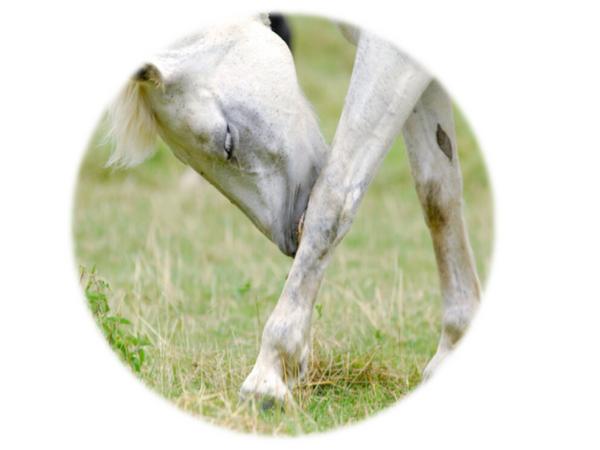
    Results Results are provided (reactive 0 to 5 ) for all allergens in all 4 allergen classes, with identification of the results obtained for each specific allergen in each class. In total, results are provided for 34 allergens. Pack of 4 full screenings: 1 - Environmental - Mites and Fungi + 2 - Environmental - Pollens + 3 - Environmental - Insects + 4 - Food Sample 5 mL serum or 10 mL - blood - serum tube   Turnaround time 10  working days   Why test? Equine allergies are common and can affect any breed, age or sex of horse. Symptoms involving the skin, respiratory and gastrointestinal systems can occur for a number of reasons with the diagnosis of allergy being made by systematically ruling out other common conditions. Once diagnosed, knowing what allergens your horse is sensitive to allows you to manage their condition in a way that is specific to their individual needs. Key points: Rapid and easy identification of potential offending allergens Non-invasive and not influenced by most medications Standardised procedure with excellent reproducibility

    €611.74

  • Allergy test for food allergens

    Allergy test for food allergens

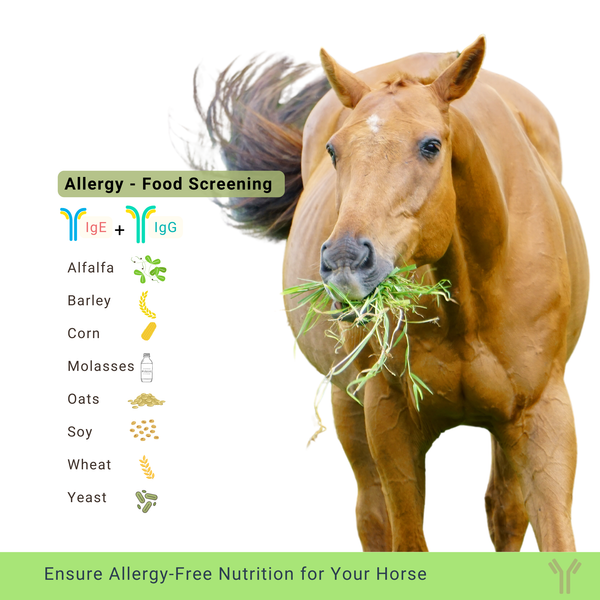
    Allergy testing Results: Results are given reactive/ non-reactive with identification of 8 different specific food allergen for both IgE and IgG.  Reactive/Non-reactive IgE and IgG for the following food allergens: wheat, barley, oats, corn, molasses, soy, yeast, alfalfa Sample 2 mL serum or 4 mL - blood - serum tube   Turnaround time 10  working days   Why test? Equine allergies are common and can affect any breed, age or sex of horse. Symptoms involving the skin, respiratory and gastrointestinal systems can occur for a number of reasons with the diagnosis of allergy being made by systematically ruling out other common conditions. Once diagnosed, knowing what allergens your horse is sensitive to allows you to manage their condition in a way that is specific to their individual needs. Key points: Rapid and easy identification of potential offending allergens Non-invasive and not influenced by most medications Standardised procedure with excellent reproducibility

    €281.25

  • Allergy test to feathers, hair and skin of other animals - Equigerminal

    Allergy test to feathers, hair and skin of other animals

    Allergy testing Results: The results are provided as positive/negative results for each of the 6 allergens composed of feathers, hair and skin from 6 species of animals that may cohabit with horses:  1 - cat, 2 - dog, 3 - rabbit, 4 - guinea pig, 5 - parrot, 6 - feather mix Sample 2 mL serum or 4 mL - blood - serum tube   Turnaround time 10  working days   Why test? Equine allergies are common and can affect any breed, age or sex of horse. Symptoms involving the skin, respiratory and gastrointestinal systems can occur for a number of reasons with the diagnosis of allergy being made by systematically ruling out other common conditions. Once diagnosed, knowing what allergens your horse is sensitive to allows you to manage their condition in a way that is specific to their individual needs. Key points: Rapid and easy identification of potential offending allergens Non-invasive and not influenced by most medications Standardised procedure with excellent reproducibility  

    €179.00

Login

Forgot your password?

Don't have an account yet?
Create account