112 products

  • Allergy test to Insects - Equigerminal

    Sweet Itch Allergy Testing

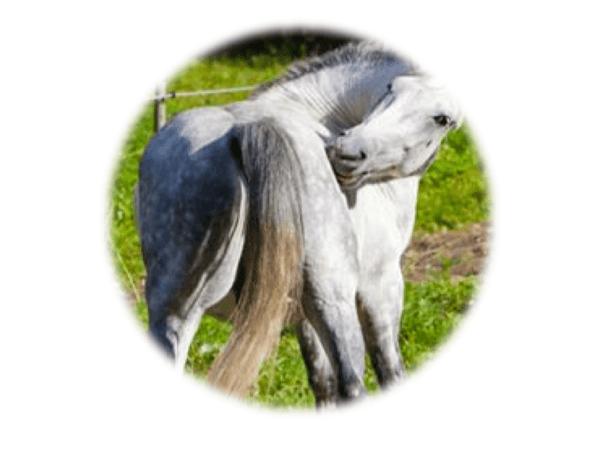
    Why Test? Equine allergies are relatively common and can affect horses of any breed, age, or sex. Allergic reactions involving the skin—particularly those associated with insect bites—are a major cause of discomfort. Conditions such as Sweet Itch (Insect Bite Hypersensitivity) are diagnosed by excluding other common causes of pruritus and dermatitis. Once confirmed, identifying the specific insect allergens affecting your horse allows for targeted management and improved quality of life. Key Benefits Fast and accurate identification of relevant insect allergens Non-invasive sample collection Not affected by most medications Highly reproducible and standardized procedure Insects Tested Results are provided for each of the following six insect genera, with reactivity scored from 0 to 5 using the HERBU scoring system:   Genus Species Observation Chrysops spp. Includes multiple species of Chrysops (deer flies) Culex spp. Includes multiple mosquito species of Culex Tabanus spp. Includes multiple horse fly species of Tabanus Stomoxys  calcitrans Stable fly: specific to Stomoxys calcitrans Culicoides spp. includes Culicoides nubeculosus Includes multiple species of Culicoides, notably C. nubeculosus (sweet itch in horses) Blattella germanica Cockroach: specific to Blattella germanica (German cockroach)   Allergen-specific IgE is measured, ensuring precise detection with no cross-reactivity from IgG or CCDs. Sample Requirements 3 mL serum or 6 mL whole blood (in serum tube) Turnaround time 2-7  working days  

    €186.88

  • Allergy test to Pollens/ Seasonal - Equigerminal

    Seasonal Allergy Testing – Pollen Sensitivities in Horses

    Why Test? Seasonal allergic reactions in horses can affect the skin, respiratory tract, and even digestion. Identifying specific sensitivities to pollens — such as grasses, weeds, and trees — is crucial for effective long-term management and avoiding unnecessary treatments. Horses of any breed, age, or sex can be affected, often with symptoms that peak during spring and summer. Key Benefits Precise allergen identification: Based on specific IgE response HERBU scoring system: Results reported on a 0–5 scale for clinical clarity Minimally invasive: Requires only a blood sample — no sedation, shaving, or intradermal injections Highly reproducible: Standardized and validated laboratory method Fast turnaround: Results ready in 2 to 7 working days What’s Tested? The test covers three key allergen classes relevant to seasonal exposures. Results are IgE-specific, avoiding cross-reactivity with IgG or CCDs. 🌱 Grasses and Crops Poa pratensis (Kentucky bluegrass)  Phleum pratense (Timothy grass)  Cynodon dactylon (Bermuda grass)  Festuca pratensis (Meadow fescue)  Sorghum halepense (Johnson grass)  Secale cereale (Rye)  Dactylis glomerata (Orchard grass)  Artemisia vulgaris (Mugwort)  🌿 Weeds Chenopodium album (Lamb’s quarters)  Plantago lanceolata (Plantain)  Rumex crispus (Curly dock)  🌳 Trees Betula populifolia (Gray birch) Salix caprea (Goat willow)  Corylus avellana (Hazel)  Fagus sylvatica (Beech)  🧪 Sample Requirements 2 mL serumor 4 mL whole blood (serum tube) ⏱️ Turnaround Time 2 to 7 working days 🧬 About the Results Results are expressed using the HERBU score (0–600) Each allergen is classified into clinical reactivity classes (0–5) IgE-specific testing avoids cross-reactions with IgG or irrelevant allergens Supports formulation of custom Allergen-Specific Immunotherapy (ASIT) when indicated

    €202.44

  • Basic allergy screening - Environmental & Insect - Equigerminal

    Basic allergy screening - Environmental & Insect

    Allergy testing Results are given as Positive or Negative allergy for each of the 4 classes of allergens, without identification of the specific allergen in each class.  Allergens classes: 1 - Dust mites, 2 - Pollens, 3 - Moulds, 4 - Insects Sample 2 mL serum or 4 mL - blood - serum tube   Turnaround time 5  working days   Why test? Equine allergies are common and can affect any breed, age or sex of horse. Symptoms involving the skin, respiratory and gastrointestinal systems can occur for a number of reasons with the diagnosis of allergy being made by systematically ruling out other common conditions. Once diagnosed, knowing what allergens your horse is sensitive to allows you to manage their condition in a way that is specific to their individual needs. Key points: Rapid and easy identification of potential offending allergens Non-invasive and not influenced by most medications Standardised procedure with excellent reproducibility  

    €142.28

  • SARS-CoV-2 molecular testing for Cats - Equigerminal

    Feline COVID19 Molecular

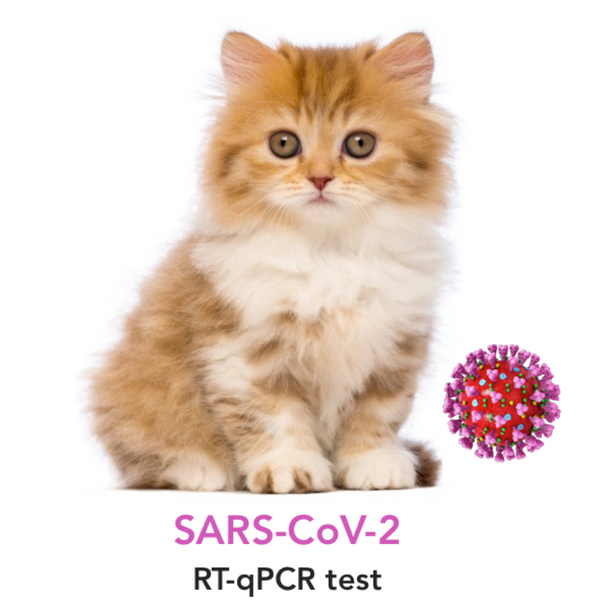
    Protect your pets from SARS-CoV-2 infection Cats are susceptible to SARS-CoV-2 by reverse zoonosis. If you're infected with COVID-19, you can infect your pets.Our team confirmed in a seroepidemiologic survey* of cats and dogs in Portugal and found antibodies against SARS-CoV-2 in 15/69 (21.74%) cats and 7/148 (4.73%) dogs. By performing this test will allow you to know if your Cat is infected with SARS-CoV-2. This test detects viral RNA of SARS-CoV-2 by RTqPCR. Please note that viral RNA is detectable only in the first two weeks after infection.  Molecular test  Reference laboratory diagnostic tests for SARS-CoV-2 are carried out by means of genome amplification tests (RNA) in a polymerase chain reaction in real time, preceded by reverse transcription (rRT-PCR). Sample type Exudate from the nasopharyngeal and oropharyngeal collected through a swab and/or rectal swabs.   Turnaround time Standard processing - Results in 2-5 working days after sample arrival at the laboratory. Clients organise and support the costs of sending the samples to the laboratory. PREMIUM processing - Results in 24 hours after sample arrival. Includes free express delivery** . The laboratory organises Express shipping with pick-up of the package at the client's address and delivery at the laboratory. ** PREMIUM SERVICES INCLUDE AN EXPRESS SHIPPING DELIVERY FOR EUROPEAN COUNTRIES FROM NON REMOTE REGIONS. Check here to know if you are in a remote European region. For remote regions EXTRA fees are applied.    FAQs Why should we test cats ? The test should be done in cats who have had contact with confirmed cases of COVID-19. There are confirmed cases of infections of cats by SARS-CoV-2 through transmission of the virus by humans or other infected cats.   For more info check  the OIE website When cats should take the test? In general, the test can be performed 5 to 14 days after contact with confirmed cases of COVID-19.   The test it is based on the detection of the SARS-CoV-2 genome (RNA) by real-time rRT-PCR techniques in exudates from the nasopharynx, oropharynx and rectal swabs. In dogs the viral load is higher in the first days of infection and starts to decrease after 15 days after infection.   What is the specificity and sensitivity of these tests? The real-time RT-PCR test used is 100% specific and does not cross-react with other animal coronaviruses. For molecular diagnosis, we use two different SARS-CoV-2 genes as targets.The sensitivity of the molecular test depends on the viral load present in the sample. The viral load is maximal 5-7 days after infection and from then on it starts to decrease, becoming diminished 15 days after infection.   References *Barroso, R., Vieira-Pires, A., Antunes, A., & Fidalgo-Carvalho, I. (2022). Susceptibility of Pets to SARS-CoV-2 Infection: Lessons from a Seroepidemiologic Survey of Cats and Dogs in Portugal. Microorganisms, 10(2), 345. https://doi.org/10.3390/microorganisms10020345

    €52.85

  • SARS-CoV-2 molecular testing for Dogs - Equigerminal

    Canine COVID19 Molecular

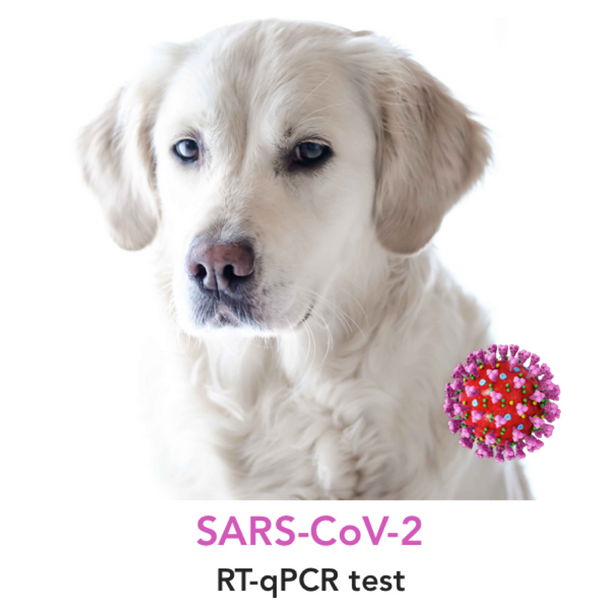
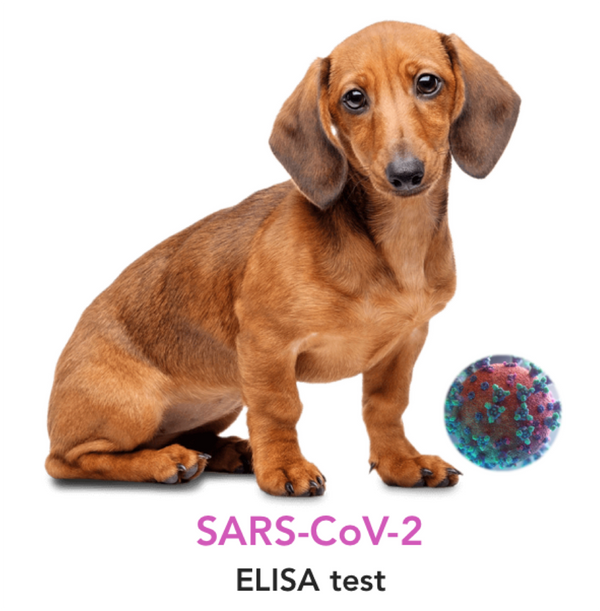
    Protect your pets from SARS-CoV-2 infection Dogs are susceptible to SARS-CoV-2 by reverse zoonosis. If you're infected with COVID-19, you can infect your pets. Our team confirmed in a seroepidemiologic survey* of cats and dogs in Portugal and found antibodies against SARS-CoV-2 in 15/69 (21.74%) cats and 7/148 (4.73%) dogs. By performing this test will allow you to know if your Dog is infected with SARS-CoV-2. This test detects viral RNA of SARS-CoV-2 by RTqPCR. Please note that viral RNA is detectable only in the first two weeks after infection.  Molecular test  Reference laboratory diagnostic tests for SARS-CoV-2 are carried out by means of genome amplification tests (RNA) in a polymerase chain reaction in real time, preceded by reverse transcription (rRT-PCR).   Sample type Exudate from the nasopharyngeal and oropharyngeal collected through a swab and/or rectal swabs.   Turnaround time Standard processing - Results in 2-5 working days after sample arrival at the laboratory. Clients organise and support the costs of sending the samples to the laboratory. PREMIUM processing - Results in 24 hours after sample arrival. Includes free express delivery** . The laboratory organises Express shipping with pick-up of the package at the client's address and delivery at the laboratory. ** PREMIUM SERVICES INCLUDE AN EXPRESS SHIPPING DELIVERY FOR EUROPEAN COUNTRIES FROM NON REMOTE REGIONS. Check here to know if you are in a remote European region. For remote regions EXTRA fees are applied.    Timeline of the SARS-CoV-2 infection in a Dog in a COVID19+ household.     From the diagnosis of COVID-19 in the dog owners (22 January 2021) to the first and second positive RT-qPCR test of the dog on 29 January 2021 and 4 February 2021, respectively, and the positive ELISA test on 14 February 2021, 16 days after the first positive RT-qPCR test. The green color means positive serological or molecular result and the red color means a negative serological or molecular result. The date corresponds to the day of the blood or swab sampling from the dog.   FAQs Why should we test dogs ? The test should be done in dogs who have had contact with confirmed cases of COVID-19. There are confirmed cases of infections of dogs by SARS-CoV-2 through transmission of the virus by humans. However, the viral load retrieved in dogs is considered low. For more info check the OIE website When dogs should take the test? In general, the test can be performed 5 to 14 days after contact with confirmed cases of COVID-19.   The test it is based on the detection of the SARS-CoV-2 genome (RNA) by real-time rRT-PCR techniques in exudates from the nasopharynx and oropharynx. In human the viral load is higher in the first days of infection and starts to decrease after 15 days after infection. What is the specificity and sensitivity of these tests? The real-time RT-PCR test used is 100% specific and does not cross-react with other human coronaviruses. For molecular diagnosis, we use two different SARS-CoV-2 proteins as targets.The sensitivity of the molecular test depends on the viral load present in the sample. The viral load is maximal 5-7 days after infection and from then on it starts to decrease, becoming diminished 15 days after infection. References *Barroso, R., Vieira-Pires, A., Antunes, A., & Fidalgo-Carvalho, I. (2022). Susceptibility of Pets to SARS-CoV-2 Infection: Lessons from a Seroepidemiologic Survey of Cats and Dogs in Portugal. Microorganisms, 10(2), 345. https://doi.org/10.3390/microorganisms10020345

    €52.85

  • SARS-CoV-2 antibody testing for Cats - Equigerminal

    Feline COVID19 Antibody

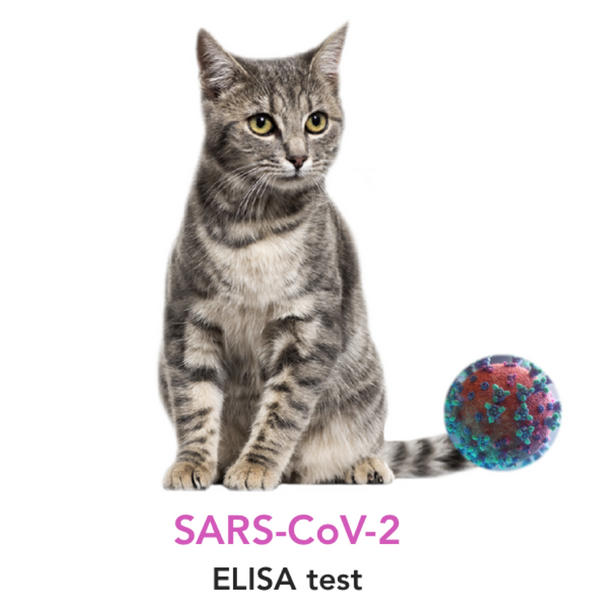
    Protect your pets from SARS-CoV-2 infection Cats are susceptible to SARS-CoV-2 by a reverse zoonosis. If you have COVID-19 you can infect your pets. Our team confirmed this finding in a seroepidemiologic survey* of cats and dogs in Portugal and found antibodies against SARS-CoV-2 in 15/69 (21.74%) cats and 7/148 (4.73%) dogs.  For more information check our peer reviewed publication at micro-organism (MDPI).  As in people, animals often have mild clinical signs, or are asymptomatic, but there are also reports of fatal cases.  Why testing By performing this test will allow you to know if your Cat has been infected with SARS-CoV-2. This test detects IgG antibodies against SARS-CoV-2 Nucleoprotein (NP)  and Spike (S) protein.  Please note, that IgG antibodies arise 2-3 weeks after infection and are maintained for some months.    Sample  2 mL blood in a dry tube or 1 mL of sera. Turnaround time  Standard processing - Results in 2-5 working days after sample arrival at the laboratory. Clients organise and support the costs of sending the samples to the laboratory. PREMIUM processing - Results in 5 hours after sample arrival. Includes free express delivery** . The laboratory organises Express shipping with pick-up of the package at the client's address and delivery at the laboratory. ** PREMIUM SERVICES INCLUDE AN EXPRESS SHIPPING DELIVERY FOR EUROPEAN COUNTRIES FROM NON REMOTE REGIONS. Check here to know if you are in a remote European region. For remote regions EXTRA fees are applied.    References *Barroso, R., Vieira-Pires, A., Antunes, A., & Fidalgo-Carvalho, I. (2022). Susceptibility of Pets to SARS-CoV-2 Infection: Lessons from a Seroepidemiologic Survey of Cats and Dogs in Portugal. Microorganisms, 10(2), 345.  https://doi.org/10.3390/microorganisms10020345  Main conclusions of the study:  - Cats that lived in COVID-19 positive households are at more risk to be infected with SARS-CoV-2  and some cats can become ill or may die.  - Cat to cat transmission of SARS-CoV-2 is also a possibility. Cat that lived in COVID-19 negative households but lived in free range and contact with other cats also tested positive.  - If you test COVID-19 positive please avoid direct contact with your cat, or ware a mask.  - Serological testing should be performed  2-3 weeks after contact with a COVID-19 positive case.   - One to 2 weeks after contact with a COVID-19 positive case a molecular RT-qPCR is recommended. Please check more info about molecular tests for cats here .  For more information please check the coverage article of our scientific publication written by an independent professional. If you would like to collaborate and participate in our study, please contact us at support@equigerminal.pt to find out if you qualify for the study and receive free testing for SARS-CoV-2.  

    €24.39

  • SARS-CoV-2 antibody testing for Dogs - Equigerminal

    Canine COVID19 Antibody

    Protect your pets from SARS-CoV-2 infection Dogs are susceptible to SARS-CoV-2 by a reverse zoonosis. If you have COVID-19 you can infect your pets. Our team confirmed this finding in a seroepidemiologic survey* of cats and dogs in Portugal and found antibodies against SARS-CoV-2 in 15/69 (21.74%) cats and 7/148 (4.73%) dogs.  By performing this test will allow you to know if your Dog has been infected with SARS-CoV-2. This test detects IgG antibodies against SARS-CoV-2 Nucleoprotein (NP)  and Spike (S) protein.  Please note, that IgG antibodies arise 2-3 weeks after infection and are maintained for some months.  As in people, animals often have mild clinical signs, or are asymptomatic, but there are also reports of fatal cases.  Sample  2 mL blood in a dry tube or 1 mL of sera. Turnaround time  Standard processing - Results in 2-5 working days after sample arrival at the laboratory. Clients organise and support the costs of sending the samples to the laboratory. PREMIUM processing - Results in 5 hours after sample arrival. Includes free express delivery** . The laboratory organises Express shipping with pick-up of the package at the client's address and delivery at the laboratory. ** PREMIUM SERVICES INCLUDE AN EXPRESS SHIPPING DELIVERY FOR EUROPEAN COUNTRIES FROM NON REMOTE REGIONS. Check here to know if you are in a remote European region. For remote regions EXTRA fees are applied.    References *Barroso, R., Vieira-Pires, A., Antunes, A., & Fidalgo-Carvalho, I. (2022). Susceptibility of Pets to SARS-CoV-2 Infection: Lessons from a Seroepidemiologic Survey of Cats and Dogs in Portugal. Microorganisms, 10(2), 345. https://doi.org/10.3390/microorganisms10020345

    €24.39

  • Gift Card EG - Equigerminal

    Gift Card EG

    Shopping for someone else but not sure what to give them? Is he/she a Horse-lover ? Give them the gift of choice with a Equigerminal gift card. Gift cards are delivered by email and contain instructions to redeem them at checkout.Our gift cards have no additional processing fees.

    €50.00 - €200.00

  • Equine Piroplasmosis qPCR

    Equine Piroplasmosis qPCR

    Our Equine Piroplasmosis qPCR Test provides accurate detection of the genome of Babesia caballi and Theileria equi, the primary agents responsible for Equine Piroplasmosis. This test is ideal for early infection detection and during febrile peaks. Product Overview qPCR Test: Detects the genome of Babesia caballi and Theileria equi, providing highly sensitive detection of piroplasms. Sample Requirements 5 mL of blood - collect blood in K3 EDTA tube for qPCR Turnaround Time Standard Processing: Results in 2 working days after sample arrival at the laboratory. Clients are responsible for organizing and covering the costs of sending the samples to the laboratory. What is Piroplasmosis? Equine piroplasmosis (EP) is a tick-borne disease of horses caused by the intraerythrocytic protozoan parasites Babesia caballi and Theileria equi. These agents are transmitted through a tick vector. Infected animals may remain carriers of these blood parasites for long periods and act as sources of infection for other ticks. The parasites are found in southern Europe, Asia, countries of the Commonwealth of Independent States, Africa, Cuba, South and Central America, and parts of the southern United States. Clinical Signs Incubation period: 12 to 19 days for T. equi and 10 to 30 days for B. caballi. Per-acute form: Rare, with only clinical observation being moribund or dead animals. Acute form: Fever, reduced appetite, elevated respiratory and pulse rates, congestion of mucous membranes, dark red urine, smaller and drier faecal balls, anaemia, and/or icterus. Subacute form: Similar to acute form but with weight loss and intermittent fever. Mucous membranes may vary from pale pink to bright yellow. Chronic form: Mild inappetence, poor performance, weight loss. Documented case fatality rates vary from 10–50%. Transmission Babesia caballi sporozoites invade red blood cells (RBCs), transforming into trophozoites which divide into merozoites, capable of infecting new RBCs. B. caballi can be found in various organs of tick vectors and transmit transovarially. Theileria equi sporozoites, inoculated into horses via a tick bite, invade lymphocytes, develop into schizonts, and release merozoites that invade RBCs. T. equi develop in the salivary glands of the tick vector and are not transmitted transovarially. Transmission is also possible through mechanical vectors contaminated by infected blood. Prevention Sanitary Prophylaxis: Testing and controlling tick exposure, using repellents, acaricides, and regular inspections, controlling and eradicating the tick vector, and quarantining EP-positive animals. Medical Prophylaxis: No current biological products are available. Antiprotozoal agents only temporarily clear T. equi from carriers. How It Works How It Works 🛒 Purchase the Test: Select and buy the test online. 📧 Receive Instructions: After payment confirmation, receive instructions for sample collection. ✨ Sample Collection: Your veterinarian collects the sample. 📄 Download Submission Form: Download the printable submission form here. 📮 Send Samples: Send to our lab by regular mail or express delivery to:Equigerminal LabRua Eduardo Correia, Nº133030-507 Coimbra, PORTUGAL 📄 Receive Results: Get the result certificate by email. If you need assistance, contact us at support@equigerminal.pt. More Info View More Info For more detailed information on the qPCR Test, including sample collection and submission instructions, please visit our website or contact our support team. Visit our detailed diagnosis page for more information. FAQs View FAQs How does the qPCR test work? The qPCR test detects the genome of Babesia caballi and Theileria equi, providing a highly sensitive and specific method for identifying the presence of the pathogens. What types of samples are required for the test? The qPCR test requires 5 mL of blood collected in a K3 EDTA tube. How long does it take to get the test results? The turnaround time for the qPCR test is typically 2 working days from the receipt of the sample in the laboratory. What should be done if a horse tests positive for Piroplasmosis? Horses that test positive should be isolated to prevent the spread of the disease. Follow biosecurity measures and consult with a veterinarian for appropriate treatment and management. How can Piroplasmosis be prevented? Prevention involves testing and controlling tick exposure, using repellents, acaricides, and regular inspections, controlling and eradicating the tick vector, and quarantining EP-positive animals.  

    €70.00

  • Equine Piroplasmosis Bundle: cELISA & qPCR Equine Piroplasmosis Bundle: cELISA & qPCR

    Equine Piroplasmosis Bundle: cELISA & qPCR

    Equine Piroplasmosis Bundle: cELISA & qPCR Our Equine Piroplasmosis Bundle combines cELISA and qPCR tests for comprehensive detection of antibodies to Babesia caballi and Theileria equi. This bundle is crucial for the official trading, import, and export of horses. Product Overview The bundle includes: Two cELISA Tests: Detect antibodies to Babesia caballi and Theileria equi. Used for official trading and movement of horses. Follows ISO/IEC 17025 standards, ensuring high quality and reliability. qPCR Test: Detects the genome of Babesia caballi and Theileria equi, providing highly sensitive detection of piroplasms, ideal for early infection detection and during febrile peaks. Sample Requirements 5 mL of blood or serum - collect blood in a dry tube for cELISA 5 mL of blood - collect blood in K3 EDTA tube for qPCR Turnaround Time Standard Processing: Results in 2 working days after sample arrival at the laboratory. Clients are responsible for organizing and covering the costs of sending the samples to the laboratory. What is Piroplasmosis? Equine piroplasmosis (EP) is a tick-borne disease of horses caused by the intraerythrocytic protozoan parasites Babesia caballi and Theileria equi. These agents are transmitted through a tick vector. Infected animals may remain carriers of these blood parasites for long periods and act as sources of infection for other ticks. The parasites are found in southern Europe, Asia, countries of the Commonwealth of Independent States, Africa, Cuba, South and Central America, and parts of the southern United States. Clinical Signs Incubation period: 12 to 19 days for T. equi and 10 to 30 days for B. caballi. Per-acute form: Rare, with only clinical observation being moribund or dead animals. Acute form: Fever, reduced appetite, elevated respiratory and pulse rates, congestion of mucous membranes, dark red urine, smaller and drier faecal balls, anaemia, and/or icterus. Subacute form: Similar to acute form but with weight loss and intermittent fever. Mucous membranes may vary from pale pink to bright yellow. Chronic form: Mild inappetence, poor performance, weight loss. Documented case fatality rates vary from 10–50%. Transmission Babesia caballi sporozoites invade red blood cells (RBCs), transforming into trophozoites which divide into merozoites, capable of infecting new RBCs. B. caballi can be found in various organs of tick vectors and transmit transovarially. Theileria equi sporozoites, inoculated into horses via a tick bite, invade lymphocytes, develop into schizonts, and release merozoites that invade RBCs. T. equi develop in the salivary glands of the tick vector and are not transmitted transovarially. Transmission is also possible through mechanical vectors contaminated by infected blood. Prevention Sanitary Prophylaxis: Testing and controlling tick exposure, using repellents, acaricides, and regular inspections, controlling and eradicating the tick vector, and quarantining EP-positive animals. Medical Prophylaxis: No current biological products are available. Antiprotozoal agents only temporarily clear T. equi from carriers. How It Works How It Works 🛒 Purchase the Test: Select and buy the test online. 📧 Receive Instructions: After payment confirmation, receive instructions for sample collection. ✨ Sample Collection: Your veterinarian collects the sample. 📄 Download Submission Form: Download the printable submission form here. 📮 Send Samples: Send to our lab by regular mail or express delivery to:Equigerminal LabIPN Incubadora, Rua Pedro Nunes, EdifC3030-199 Coimbra, PORTUGAL 📄 Receive Results: Get the result certificate by email. If you need assistance, contact us at support@equigerminal.pt. More Info View More Info For more detailed information on the cELISA and qPCR Tests, including sample collection and submission instructions, please visit our website or contact our support team. Visit our detailed diagnosis page for more information. FAQs View FAQs How do the cELISA and qPCR tests work? The cELISA test detects antibodies to Babesia caballi and Theileria equi, providing a highly sensitive and specific method for identifying the presence of the pathogens. The qPCR test detects the genome of these pathogens, making it ideal for early infection detection and during febrile peaks. What types of samples are required for the tests? The cELISA test requires 5 mL of blood or serum collected in a dry tube. The qPCR test requires 5 mL of blood collected in a K3 EDTA tube. How long does it take to get the test results? The turnaround time for the cELISA and qPCR tests is typically 2 working days from the receipt of the sample in the laboratory. What should be done if a horse tests positive for Piroplasmosis? Horses that test positive should be isolated to prevent the spread of the disease. Follow biosecurity measures and consult with a veterinarian for appropriate treatment and management. How can Piroplasmosis be prevented? Prevention involves testing and controlling tick exposure, using repellents, acaricides, and regular inspections, controlling and eradicating the tick vector, and quarantining EP-positive animals.

    €121.95

  • Anemia - Pathogen screening panel - Equigerminal

    Equine Anemia Pathogen Screening Panel

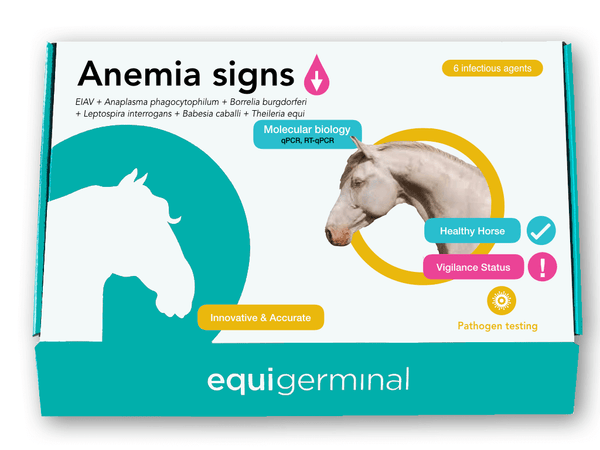
    Pathogen profile Screening of 6 pathogens responsible anemia signs in equines : Equine Infectious Anemia Virus (EIAV), Anaplasma phagocytophilum, Borrelia Burgdorferi, Leptospira interrogans, Babesia caballi and Theileria equi. Sample 5 mL of blood - K3 EDTA tube Turnaround time 2 to 5  working days

    €142.28

  • Neurological signs profile - Equigerminal

    Neurological signs profile

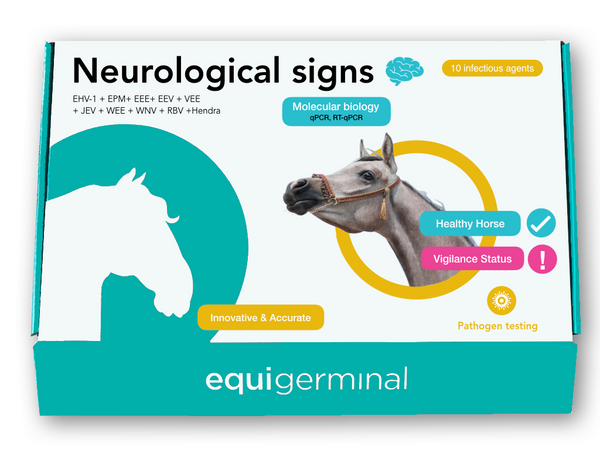
    Pathogen profile This profile includes 10 qPCR tests that detects 10 pathogens responsible for  neurological disease in horses such as: EHV-1, EPM, EEE, EEV, VEE, JEV, WEE, WNV, RBV, Hendra. Sample 5 mL - blood ( K3 EDTA tube) and/or 5mL - liquor (CSF) in a sterile tube Turnaround time 2 to 5  working days  

    €300.00

Login

Forgot your password?

Don't have an account yet?
Create account