31 products

  • Pearl dilution - Equigerminal

    Pearl dilution

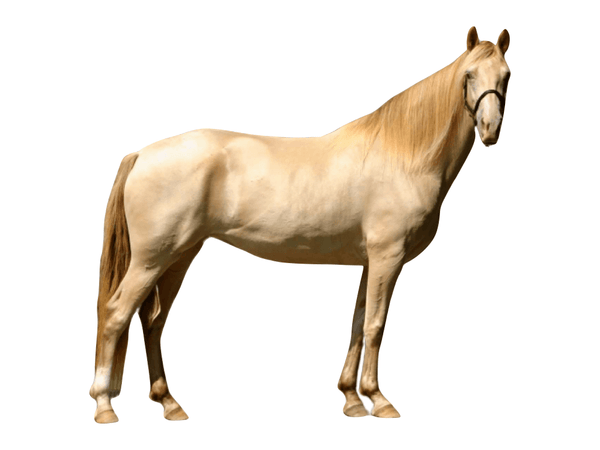
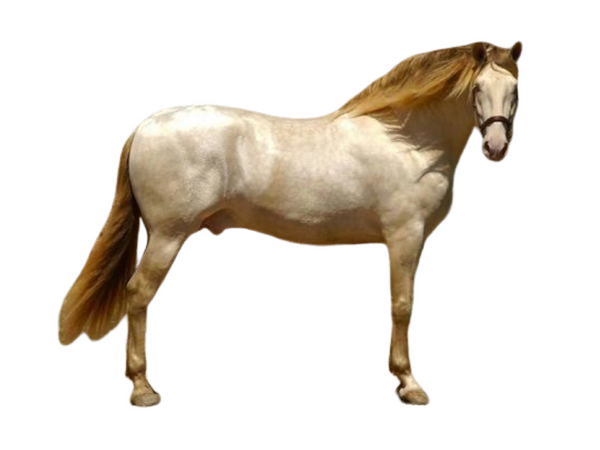
    DNA test The DNA test is designed to verify the presence of the pearl allele (Prl), a coat color dilution modifier discovered in horses of Iberian origin. This variant produces dilutions of the base color, introducing golden tones to the coat.   Sample requirements  20 to 30 hair roots, or 5 mL of blood in a K3 EDTA tube.   Turnaround time The results are available within 2 to 5 working days. Why test? Purpose of the Test Pearl is a rare variant that dilutes the base coat colors in a less pronounced manner than the cream variant (Cr). It can complement the effect of the Cream variant, leading to very diluted coats similar to Cream double dilutes when both are present in heterozygosity. Testing is crucial for breeding purposes, as heterozygous Pearl horses can produce diluted offspring when bred with another Pearl carrier or a Cream dilute horse. The impact of the Pearl dilution varies based on the horse's base color, affecting the phenotype differently across different base colors.    Interpretation of Results for the Pearl Locus  N/N - Negative for Pearl The horse is genetically negative for the pearl allele, meaning it does not have any copies of this genetic variant. Its phenotype reflects the natural, unaltered base coat color. This horse will not pass the pearl dilution trait to its offspring, ensuring the continuation of the base coat color in the lineage. N/Prl – Positive Heterozygous  The horse is positive for the Pearl allele in a heterozygous state, indicating it carries one copy of the pearl variant. This configuration subtly dilutes the base coat color, infusing it with golden tones, although in some instances, the dilution effect may not be visually apparent.  As a heterozygous carrier, there's a 50% probability that it will transmit this dilution trait to its offspring, potentially leading to varied coat colors among the progeny. Prl/Prl -  Positive Homozygous  The horse is positive for the pearl allele in a homozygous state, carrying two copies of this genetic variant. This genotype manifests in a more noticeable dilution of the coat color, even in the absence of other dilution genes. Being homozygous, the horse will invariably pass the pearl allele to all of its offspring, ensuring the trait's propagation and contributing to the diversity of coat colors in future generations.   Additional insights The interplay between the Cream and Pearl genes subtly yet significantly affects horse coat colors, particularly evident in horses heterozygous for both genes (N/Cr + N/Prl). These horses often resemble double cream dilutes but can be distinguished by slightly darker eye colors and a marginally darker coat. Unlike double cream dilutes, the combined dilution effect of heterozygous Cream and Pearl genes might not be as pronounced, requiring careful observation or genetic testing for accurate identification.Homozygous Pearl horses (Prl/Prl) exhibit a more noticeable dilution, displaying pronounced golden tones in their coats compared to their homozygous Cream counterparts (Cr/Cr), whose phenotype is lighter. Interestingly, the eye and skin colors in foals—typically blue and pinkish, respectively—tend to darken with age, while the coat lightens.The subtle dilution effects of a single Pearl allele (N/Prl) often go undetected without genetic analysis, as they minimally alter the horse's appearance. However, the presence of two Pearl alleles (Prl/Prl) significantly enhances the dilution, affecting not just the coat but also the eye color, with amber or green hues depending on the base coat color.Identified in Iberian breeds like the Purebred Lusitano (PSL) and Purebred Spanish Horse (PRE), and speculated in the Spanish Mustang, the Pearl gene's inclusion in genetic discussions highlights its broad impact across equine breeds. This genetic diversity, particularly when Pearl intersects with Cream, underscores the complexity of equine coat colors and the value of genetic testing for breeders. 

    €43.05

  • Dun dilution - Equigerminal

    Dun dilution

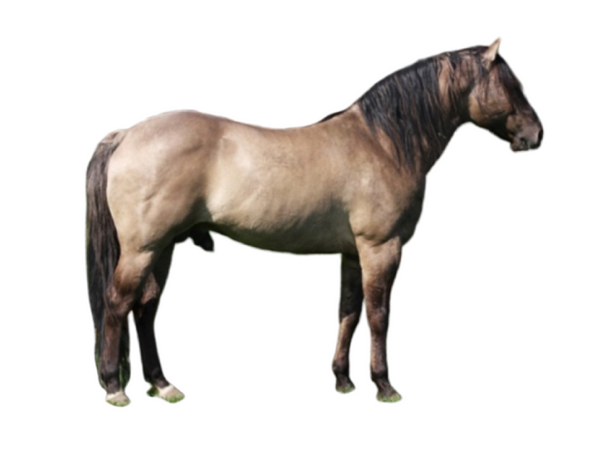
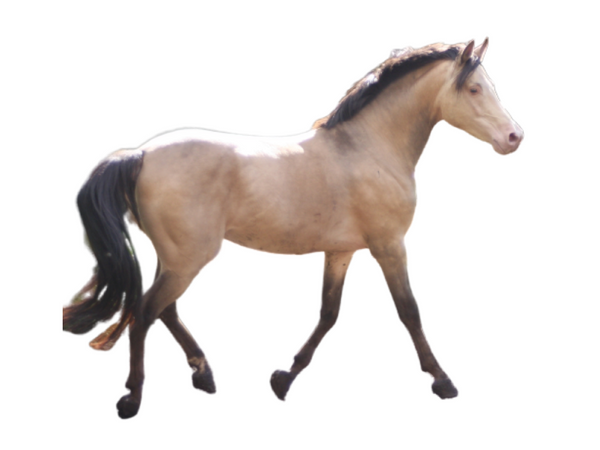
    DNA test The DNA test verifies the presence of 2 mutations of the TBX3 gene responsible for Dun dilution and primitive markings.  Sample 30 to 40 - hair roots - envelope or 5 mL - blood - K3 EDTA tube Turnaround time 2 to 5  working days Why test? The DNA test that will provide information for both dun dilution (D) and the primitive markings (nd1, nd2).  Results description D/ - Homozygous for Dun. The basic coat colour will be diluted by Dun and primitive markings expressed. The Dun genetic variant will be passed on 100% of the offspring. D/nd1 - 1 copy of Dun and one copy of nd1. The basic coat colour will be diluted by Dun and primitive markings expressed. Horse can pass on Dun dilution (50%) or primitive markings without dilution (50%). D/nd2 - 1 copy of Dun and one copy of nd2. Horse will have Dun dilution and express primitive markings. The Dun genetic variant will be passed  with a 50% chance to the offspring nd1/nd1 - Homozygous for nd1. The basic coat colour will not be diluted but primitive markings are expressed in varying levels. The primitive markings will be passed on 100% of the offspring. nd1/nd2 - 1 copy of nd1 and one copy of nd2. The basic coat colour will not be diluted but primitive markings are expressed in varying levels. The primitive markings will be passed on 50% of the offspring. nd2/nd2 - Negative for Dun Dilution and primitive markings. Additional information Dun is a dominant dilution gene of equines characterised by lightening of the body color, leaving the head, lower legs, mane and tail undiluted. Dun is also typically characterised by “primitive markings” consisting of a dark dorsal stripe and sometimes leg barring, shoulder stripes and concentric marks on the forehead. Dun is present in many breeds of horses including (but not limited to) Appaloosa, Bashkir Curly, Iberian horse breeds, Icelandic Horse, Mustang, Norwegian Fjord, Paint, Paso Fino, Peruvian Paso, Quarter Horse and several of the pony breeds  

    €43.05

  • Champagne dilution - Equigerminal

    Champagne dilution

    DNA test The DNA test verifies the presence of the champagne mutation. Champagne  is a coat dilution modifier. Sample 30 to 40 - hair roots - envelope or 5 mL - blood - K3 EDTA tube Turnaround time 2 to 5  working days Why test? Equigerminal offers testing for the dominant champagne gene-mutation. DNA testing may be useful in cases whereby a horse has previously tested negative for cream or silver dilutions, but appears to have a lightened-coat. Testing is also used to determine Homozygosity of the champagne gene.  Results description The DNA test verifies the presence of the champagne mutation and presents results as one of the following: N/ – Non-champagne horse. N/Ch – Positive for dominant champagne gene, possessing one inherited copy. Coat will be diluted accordingly. Will pass champagne gene to approximately 50% of the offspring. Ch/ – Positive for dominant champagne gene, possessing two inherited copies. Coat will be diluted accordingly. Additional information Champagne dilution is caused by a dominant gene, meaning that a horse with a single copy of the Champagne gene will have Champagne characteristics. The Champagne dilution gene lightens a horse’s coat color by diluting the pigment. The specific color produced will depend on the horse’s base color: bay coats to a golden brown, black coats can lighten to a dark brown, and chestnut coats to an apricot or gold. A horse can carry more than one dilution gene which can further affect coat color. Unlike cream dilution, there are no visual differences between a horse with one copy or two copies of Champagne. Although similar to the cream, pearl and dun dilutions, the Champagne gene has certain characteristics that distinguish it from other dilutions. Common characteristics of a Champagne horse include pinkish freckled or mottled skin, a shiny coat that is often slightly darker in the winter, and a hazel eye color. Champagne horses are typically born with a blue eye color that evolves to a hazel or an amber colour and pink skin that becomes darker and more freckled over time, especially around the eyes and muzzle. A homozygous Champagne horse will always pass one copy of the Champagne gene to its foal. Heterozygous horses have a 50% chance of passing the gene on to its foals.

    €43.05

  • Extension - Chestnut or Sorrel - Equigerminal

    Extension, Chestnut or Sorrel

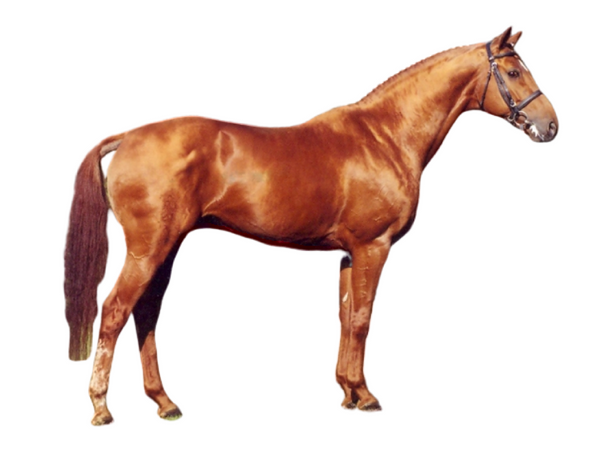
     DNA test DNA test for the Extension gene that controls the production of black or red pigment throughout the coat. Sample 30 to 40 - hair roots - envelope or 5 mL - blood - K3 EDTA tube Turnaround time 2 to 5  working days Why test? The DNA testing for the Extension gene can be used to identify those black horses for which neither pedigree nor breeding records is informative for identifying carriers of the recessive red factor. Since red is inherited as a recessive trait, it is relatively easy to start up a breeding program that will produce only red horses. It has been more difficult to initiate a black breeding program as black (Ee) horses can produce red foals.  Results description The DNA test for Extension gene verifies the base coat color and presents results as one of the following: E/E - Dominant Homozygous for Extension - Black, Bay or Brown - Only the black factor is expressed. The horse can only transmit the (E) allele E/E to it offspring. It cannot have foals with basic coat colour Chestnut or Sorrel foals regardless of the color of the mate. The Agouti gene will determine if the basic coat color will be black, bay or brown, unless modified by other color modifying genes. E/e - Heterozygous for Extension - Black, Bay or Brown - Both red and black factor are expressed. It can transmit either (E) or (e) allele to its offspring. The Agouti gene will determine if the basic coat color will be black, bay or brown, unless modified by other color modifying genes. e/e - Recessive homozygous for Extension - Chestnut or Sorrel - Only the red pigment is expressed. The basic coat color is chestnut or sorrel unless modified by other color modifying genes. Additional information Equine coat color is built on one of two possible base pigments: red or black. The Extension gene controls the production of this base pigment (red or black). All horses will have the genetics for black or red pigment, regardless of their physical appearance. There are a number of dilutions patterns and modifiers, which a horse can carry that affect the base pigment of a horse. The Extension gene (red factor) has two alternative states (alleles). The dominant allele (E) produces black pigment in the coat. The recessive allele (e) produces red pigment. Red horses (chestnuts, sorrels, palominos…) are homozygous, that is they have two alleles, for the recessive red allele (e/e). Black pigmented horses (black, bay, brown, buckskin…) have at least one (E) allele. They can be homozygous (E/E) or heterozygous (E/e). A horse that is homozygous (E/E) will not produce red offspring, regardless of the color of the mate.  

    €43.05

  • Silver dilution (Dapple) / MCOA - Equigerminal

    Silver dilution (Dapple)

    DNA test The genetic test verifies the presence of the Silver coat dilution modifier. The Silver genetic variant is associated with Multiple Congenital Ocular Abnormalities (MCOA) in some breeds.   Sample 30 to 40 - hair roots - envelope or 5 mL - blood - K3 EDTA tube Turnaround time 2 to 5  working days Results description The DNA test verifies the presence of the silver gene and presents results as one of the following: N/ – Negative for Silver - No evidence of the genetic variant for Silver. No risk to develop Multiple Congenital Ocular Abnormalities (MCOA) associated to Silver. Z/N - Heterozygous for Silver - The Black and Bay basic coat colour will be diluted by Silver. Black-based horses will be chocolate with flaxen mane and tail. Bay-based horses will have pigment on lower legs lightened and flaxen mane and tail. No effect on chestnut color. Moderate risk to develop MCOA. Z/ – Homozygous for Silver - Two copies of altered sequence detected. Black-based horses will be chocolate with flaxen mane and tail. Bay-based horses will have pigment on lower legs lightened and flaxen mane and tail. No effect on chestnut color, but will pass the variant on to 100% of offspring.  Higher risk to develop severe MCOA. Additional information The Silver dilution behaves as a coat colour dominant trait on bay and black base coat colours. While chestnut base colour is not affected by the Silver dilution and can pass the variant silently to the offspring.  In short, the Silver dilution variant (Z) will only affect coat colour phenotype of black pigmented horses (E/e or E/E) and has no effect on red pigmented horses (e/e).  In addition, the eye disorders associated to Silver genetic variant are incomplete autosomal dominant:  homozygous horses (with two copies of Z)  may be at higher risk of developing severe Multiple Congenital Ocular Abnormalities (MCOA), while heterozygous (with one copy of Z) may develop a milder form of MCOA.   The effects of the silver dilution on coat colour gene can vary widely. The agouti gene affects the coat colour by controlling the distribution of the black pigment whereas the Silver dilution variant dilutes areas of the black pigment. Dilution by the Silver variant on a horse with a uniform black base typically involves lightening of the mane and tail and a dilution of the body to a chocolate color, often dappled as well. A Bay horse carrying the Silver gene will usually have a lightened mane and tail, as well as lightened lower legs. It is important to know that although a red horse (e/e) will not be diluted by the silver variant, it can be a carrier of the genetic variant and thus potentially pass the gene on to its offspring. Silver dilution has been identified in a number of horse breeds including the Quarter horse, the Rocky Mountain horse, the Icelandic horse, Morgans, Shetland ponies and the Miniature horse. References: Brunberg, E., Andersson, L., Cothran, G., Sandberg, K., Mikko, S., Lindgren, G.: A missense mutation in PMEL17 is associated with the silver coat color in the horse. BMC Genetics 7:46, 2006. Andersson, L.S., Wilbe, M., Viluma, A., Cothran, G., Ekesten, B., Ewart, S., Lindgren, G.: Equine Multiple Congenital Ocular Anomalies and Silver Coat Colour Result from the Pleiotropic Effects of Mutant PMEL. PLoS One 8:e75639, 2013.

    €43.05

  • Projected Height test - LCORL/NCAPG - Equigerminal Projected Height test - LCORL/NCAPG - Equigerminal

    Projected Height test, LCORL/NCAPG

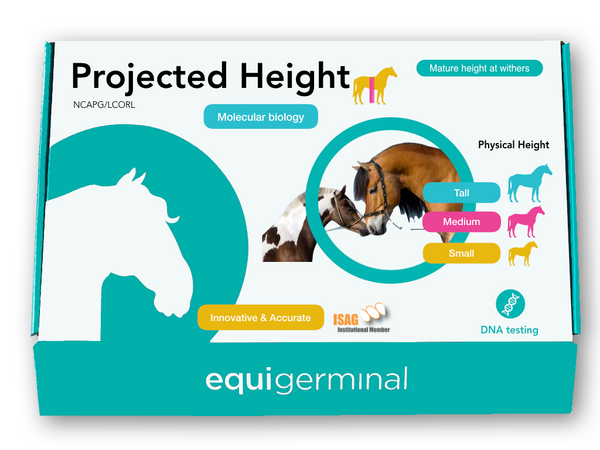
      DNA test kit DNA test to predict the genetic potential for being a small, medium or tall height horse. Sample 30 to 40 hair roots - envelope or 5 mL of blood  - K3 EDTA tube Turnaround time 5 to 8  working days Why test?  Confidently predict the expected mature height at withers of a young foal. Identify horses that are 70% likely to be within the specific height range desired by the owner. Produce horses of a desired height more consistently. Results description The DNA test verifies the presence of the (C) allele associated to tall height horses, and presents the results as one of the following:  C/C – Tall physical height. This genotype, with two copies of the (C) allele,  is associated with large horses, (169+/-4 cm height at the withers). This genotype can be found in draught horses, Westphalians (31%), Oldenburgs (29%), Hanoverians (28%), Holsteiners (18%) and Pureblood Lusitanos (4%). T/C – Medium physical height. This genotype, with one copy of the (T) allele and another of the (C) allele,  is associated with medium-sized horses (164+/-5 cm height at the withers). This genotype can be found in the Holsteiner (64%), Westphalian (60%), Hanoverian (56%) and Pureblood Lusitano (29%). T/T – Small physical height. This genotype, with two copies of the (T) allele, is associated with smaller horses (159 +/- 4 cm height at the withers) and ponies (<148 cm height at the withers). This genotype can be found in the majority of ponies, Arabs (100%) and Pureblood Lusitanos (67%).                                 Additional information The development of the skeletal apparatus is regulated by the expression of the gene LCORL. Recent studies have identified a variation of a simple nucleotide base (Single Nucleotide Polymorphism) in the promoter of this gene. The replacement of a thymine (T) with a cytosine (C) varies the expression of the LCORL gene. This variation in the expression influences the horse’s dimension. Consequently, if the expression of the LCORL gene is diminished the resulting horse has a larger body dimension (bones are longer).

    €62.73

  • DNA Disorder-Free Certified

    DNA Disorder-Free Certified

      Certified DNA Disorder-Free Lines Ensure your horse's lineage is free from genetic disorders with our comprehensive DNA testing panel. Certify your horse against 10 genetic disorders: SCID, LFS, CA, PSSM1, HYPP, GBED, HERDA, MH, CM, WFFS. Sample Collection Hair Roots: 30 to 40 hair roots. Blood Sample: 5 mL blood in a K3 EDTA tube. Turnaround Time Standard Processing: Results in 5 to 10 working days after sample arrival at the laboratory. Clients organize and cover the costs of sending the samples. Why Test? Our Certified DNA Disorder-Free Lines test helps breeders, purchasers, and studbook certifiers ensure that horses are free from genetic disorders. This guarantees healthier horses, informed breeding decisions, and enhanced peace of mind. Learn More Results Description The DNA test results will be one of the following: n/n: Negative. No affected allele present. n/P1: Positive heterozygous. One mutated allele present. The horse can pass the allele to 50% of its progeny. P1/P1: Positive homozygous. Two mutated alleles present. The horse will pass the allele to 100% of its offspring. Additional Information Polysaccharide Storage Myopathy (PSSM1) is a hereditary muscle disease that affects many breeds. The condition is caused by a mutation in the GYS1 gene, leading to an abnormal accumulation of glycogen in the muscles. This can cause symptoms such as muscle tremors, stiffness, reluctance to move, and excessive sweating. Management of PSSM1 includes dietary changes and regular exercise to help mitigate symptoms. Check our FAQs for more information FAQs Why is genetic testing important for horse breeders? Genetic testing is essential for breeders to make informed breeding decisions and to ensure that their horses do not carry alleles for genetic disorders. This helps in maintaining the health and performance of the breed. What breeds are affected by SCID and LFS? SCID and LFS are commonly found in Arabian horses and breeds influenced by Arabian bloodlines. Testing is crucial for breeding and purchasing decisions to ensure the health of the horses. How prevalent are genetic disorders in certain horse breeds? Genetic disorders can have significant frequencies in specific breeds. For example, HERDA is prevalent in Quarter Horses, while WFFS often affects Warmbloods. Regular testing helps in identifying carriers and making informed decisions. How do genetic disorders impact horse health? Genetic disorders such as SCID, LFS, PSSM1, HYPP, and others can significantly impact the health, performance, and longevity of horses. Early detection through genetic testing allows for better management and breeding practices to ensure healthier future generations. Visit our full FAQ page for more details. How it Works ✨ Purchase the Test: Select and buy the DNA test online. 📄 Receive Instructions: After payment confirmation, receive instructions for hair root collection and a printable submission form. ✂️ Collect Hair Roots: Pluck hair roots, tape them on the submission form, place it in an envelope or sealed plastic bag. 📬 Send Samples: Send to our lab by regular mail or express delivery to: Equigerminal LabRua Eduardo Correia, Nº133030-504 Coimbra, PORTUGAL 📧 Receive Results: Get the result certificate by email. If you need assistance, contact us at support@equigerminal.pt. ♻️ Note: No need for a sample collection kit, enhancing sustainability by reducing waste and plastic use.

    €299.00

Login

Forgot your password?

Don't have an account yet?
Create account