-
Melanoma
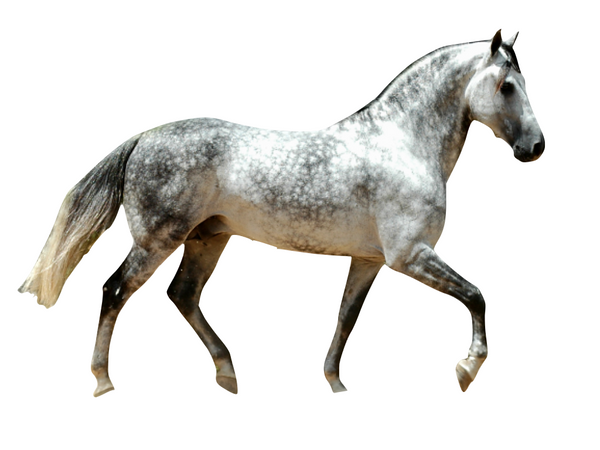
DNA test 2 DNA tests that can help to predict the possible type of incidence for developing dermal melanomas on grey horses. Sample 5 mL - blood - K3 EDTA tube Turnaround time 2 to 5 working days Why test? This 2 DNA tests for melanoma confirms if the grey horse is heterozygous (G/N) or homozygous (G/) for the Grey gene and if is Homozygous for non-agouti (a/a).The results can predict the type incidence for developing dermal melanomas. Results description The genetic profile test verifies the genotype of the Grey and Agouti genes, and presents results as one of the following: Melanoma incidence risk G/N + A/a or A/A – Moderate incidence of dermal melanomas. G/N + a/a – Moderate to high incidence of dermal melanomas. G/G + A/a or A/A – High incidence of dermal melanomas. G/G + a/a – Very high incidence of dermal melanomas. Additional information Most melanomas found in horses are benign. Once present these benign types of melanoma are not aggressive in their growth and may progress over several years requiring little treatment. A melanoma is one of the most common skin tumors seen in a horse or pony. Grey horses have a high incidence of dermal melanomas that are commonly seen around the tail and head. Over 80% of Grey horses older than 15 years will develop melanoma. Grey homozygotes are more likely to develop melanoma than heterozygotes. Grey horses that are homozygous for non-agouti (aa) genotype at the Agouti locus, also have a higher risk for melanoma. Many Grey horses show depigmentation of the skin around the eyes, mouth and anus but there are no health risks associated with this condition. Malignant melanomas in horses can cause severe problems and can be life-threatening. Problems develop when melanomas are present internally or if they become so large that they ulcerate, bleed and become infected. Equine melanomas sometimes grow so large that they can cause severe weight loss and/or colic. If a melanoma is situated on the head in an area where a bridle, saddle, head collar or rug might rub, it will be uncomfortable for the horse, potentially causing behavioural problems. Infections can also occur.
€73.80
-
Cream dilution
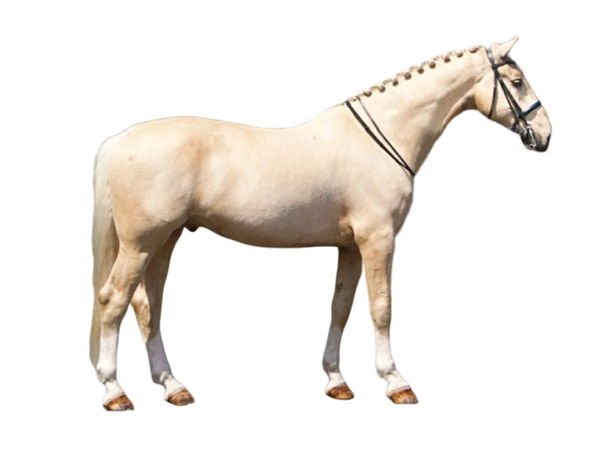
DNA test The cream dilution gene has varying effects on different base colours. To obtain the exact ‘type name’ of cream dilute of the horse it is recommended to run this test in conjunction with Extension and Agouti genes. Sample 30 to 40 - hair roots - envelope or 5 mL - blood - K3 EDTA tube Turnaround time 2 to 5 working days Why test? Testing is useful where genetic confirmation is required or to define cream dilute horses aside from other genes with similar effects (such as champagne dilution and grey). Running this test will confirm if a horse is cream dilute. As mentioned the cream dilution gene has varying effects on different base colours. To obtain the exact ‘type name’ of cream dilute of the horse (eg. Buckskin, Palomino, Cremello…) it is recommended to run this test in conjunction with red factor and agouti. Results description The DNA test verifies the presence of the Cream dilution gene and presents results as one of the following: N/ - Non-dilute. Basic colours are black, bay or chestnut, in the absence of other modifying genes. N/Cr – Dilute. Heterozygous, one copy of the Cream (Cr) allele. Chestnut is diluted to palomino; bay is diluted to buckskin and black is diluted to smoky black. These colours can be further modified by the actions of other genes. Cr/ - Double dilute, two copies of the Cream (Cr) allele. Chestnut is diluted to cremello; bay is diluted to perlino and black is diluted to smoky cream. Additional information The cream dilution gene affects both red and black pigment and is responsible for ‘diluting’ the carrying horse to lighter coat shades and colours. In many breeds this is often considered a highly desirable trait. Cream dilution is the gene responsible for palominos, buckskins, cremellos and many more. Horses which carry one copy of the cream gene are identified as single dilutes; they are heterozygous for the cream dilution gene. In the simplest case, a bay horse with a single copy of cream is known as a buckskin, a single dilute black horse is known as a smoky black and a single dilute chestnut or sorrel horse is known as a palomino. Single dilute horses have a 50% chance on passing the cream gene on to its offspring. Horses which carry two copies of the cream gene are referred to as double dilutes; they are homozygous for the cream dilution gene. A bay horse with two copies of cream is known as a perlino. A black horse with two copies of cream is known as a smoky cream and a chestnut or sorrel horse that carries two copies of cream is known as a cremello. Double dilute horses will always pass on a copy of the cream gene to its foals.
€43.05
-
PPID or Equine Cushing’s Disease, ACTH
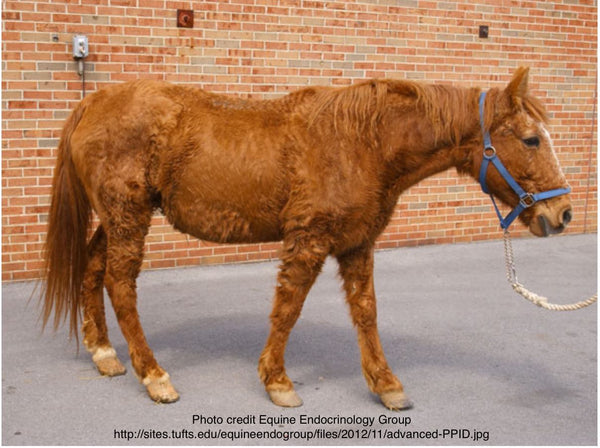
Adrenocorticotropic hormone - ACTH ACTH levels are seasonal in horses Increased ACTH levels could indicate Pituitary Pars Intermedia Dysfunction PPID, also known as Equine Cushing’s Disease. For more information about PPID please check the 2021 EEG recommendations on diagnosis and management of pituitary pars intermedia dysfunction (PPID). Sample requirements 5 mL of blood in EDTA tube Separate the plasma by centrifugation or gravity and freeze plasma at -20ºC (in a regular freezer). Send freeze plasma to lab ASAP in a refrigerated package. Turnaround time 2 to 5 working days
€19.38
-
Glanders Burkholderia mallei qPCR
Pathogen test The PCR test detects the genome (DNA) of Burkholderia mallei, the bacteria responsible for Glanders in equines. Sample 5 mL - blood - K3 EDTA tube Turnaround time 2 to 5 working days What is Glanders? Glanders is a contagious and fatal disease of horses, donkeys, and mules, caused by infection with the bacterium Burkholderia mallei.The pathogen causes nodules and ulcerations in the upper respiratory tract and lungs. A skin form also occurs, known as ‘farcy’. Control of glanders requires testing of suspect clinical cases, screening of apparently normal equids, and elimination of positive reactors. As B. mallei can be transmitted to humans, all infected/contaminated or potentially infected/contaminated material must be handled in a laboratory with appropriate biosafety and biosecurity controls following a biorisk analysis. Glanders is an OIE listed disease as described in the Terrestrial Animal Health Code of the World Organisation for Animal Health (OIE). As indicated in the OIE Terrestrial Animal Health Code any occurrence of glanders must be notified to the OIE. Clinical signs The disease causes nodules and ulcerations in the respiratory tract and lungs in animals. A skin form, known as ‘farcy’, also occurs. Both acute and chronic forms of the disease have been described. Acute forms occur most frequently in donkeys and mules, with high fever and respiratory signs. In horses, glanders generally takes a more chronic course and they may survive for several years. There are four recognised clinical presentations of glanders: nasal, pulmonary, cutaneous and asymptomatic carrier. These different forms of glanders are usually referred to according to the location of the initial infection. The nasal and pulmonary forms tend to be more acute while the cutaneous form is a chronic process. Inflammatory nodules and ulcers develop in the nasal passages and give rise to a sticky yellow discharge. Stellate scarring follows upon healing of the ulcers. The formation of nodular abscesses in the lungs is accompanied by progressive debility, coughing and may also be accompanied by diarrhoea. In the cutaneous form (“farcy’), the lymph vessels are enlarged; nodular abscesses form along their course, which then ulcerate and discharge yellow pus. Nodules are regularly found in the liver and spleen, leading to wasting and death. Transmission The most common source of infection is ingestion of contaminated food or water. Contaminated aerosols (produced by coughing and sneezing), and contaminated fomites brought to the animals via grooming equipment and tack may also be a source of infection. The bacteria can also enter the body through contact with lesions or abrasions of the skin or through mucosa. In this case, a local infection with ulceration may develop spreading to other parts of the body in the course of the disease. Poor husbandry and feeding conditions as well as animal transport can be predisposing factors. Unsanitary conditions and over-crowded stables are risk factors. Prevention To date, no treatment with veterinary drugs is capable to cure the infection. Control of glanders requires early detection and diagnostic testing of suspected clinical cases, screening of apparently normal equids, and elimination of positive cases. For glanders-free countries, there are recommendations on importing equines. An international veterinary certificate is required attesting that the animals showed no clinical signs of glanders and were kept in an exporting country free of the disease for at least 6 months prior to shipment.
€55.35
-
Dourine - Trypanosoma equiperdum, qPCR
Pathogen test The PCR test detects the genome (DNA) of Trypanosoma equiperdum, the pathogen responsible for Dourine. Sample 5 mL - blood - K3 EDTA tube Turnaround time 2 to 5 working days What is Dourine? Dourine is a chronic or acute contagious disease of breeding equids that is transmitted directly from animal to animal during coitus. The causal organism is Trypanosoma equiperdum. Dourine is the only trypanosomosis that is not transmitted by an invertebrate vector. Trypanosoma equiperdum differs from other trypanosomes in that it is primarily a tissue parasite that is rarely detected in the blood. There is no known natural reservoir of the parasite other than infected equids. Clinical signs Dourine is characterised mainly by swelling of the genitalia, cutaneous plaques and neurological signsThe symptoms vary with the virulence of the strain, the nutritional status of the horse, and stress factors. The clinical signs often develop over weeks or months. They frequently wax and wane; relapses may be precipitated by stress. This can occur several times before the animal either dies or experiences an apparent recovery.Genital edema and a mucopurulent discharge are often the first signs. Mares develop a mucopurulent vaginal discharge, and the vulva becomes oedematous; The genital region, perineum and udder may become depigmented. Abortion can occur with more virulent strains. Stallions develop edema of the prepuce and glans penis, and can have a mucopurulent discharge from the urethra. In stallions, the swelling may spread to the scrotum, perineum, ventral abdomen and thorax. Neurological signs can develop soon after the genital edema, or weeks to months later. Restlessness and weight shifting from one leg to another is often followed by progressive weakness, incoordination and, eventually, paralysis. Facial paralysis, which is generally unilateral, may be seen in some animals. Conjunctivitis and keratitis are common, and in some infected herds, ocular disease may be the first sign of dourine. Anemia and intermittent fever may also be found. In addition, dourine results in a progressive loss of condition, predisposing animals to other diseases. Transmission Unlike other trypanosomal infections, dourine is transmitted almost exclusively during breeding. Transmission from stallions to mares is more common, but mares can also transmit the disease to stallions. T. equiperdum can be found in the vaginal secretions of infected mares and the seminal fluid, mucous exudate of the penis, and sheath of stallions. Periodically, the parasites disappear from the genital tract and the animal becomes noninfectious for weeks to months. Non infectious periods are more common late in the disease. Male donkeys can be asymptomatic carriers. Rarely, infected mares pass the infection to their foals, possibly before birth or through the milk. Infections are also thought to occur through mucous membranes such as the conjunctiva. Other means of transmission may also be possible; however, there is currently no evidence that arthropod vectors play any role in transmission. Sexually immature animals that become infected can transmit the organism when they mature. Prevention To prevent dourine from being introduced into a herd or region, new animals should be quarantined and tested by serology. When dourine is found in an area, quarantines and the cessation of breeding can prevent transmission while infected animals are identified. Dourine can be eradicated from a herd, using serology to identify infected equids. Infected animals are euthanised. In some cases, stallions have been castrated to prevent disease transmission; however, geldings can still transmit the disease if they display copulatory behavior. Successful treatment with trypanocidal drugs has been reported in some endemic areas. However, therapeutic regimes have not been thoroughly investigated, and treatment is usually discouraged due to fears that the organism will persist inapparently. Good hygiene should be used at assisted matings. No vaccine is available.
€55.35
-
AMH Anti-Müllerian Hormone
Parameter Anti-Müllerian Hormone (AMH) Sample 5 mL - blood - serum tube Turnaround time 2 to 5 working days
€92.25
-
Equine Herpesvirus Type 1 & Equine Herpesvirus Type 4, qPCR
Pathogen test Two qPCR test, one that detects the genome (DNA) of Equine Herpesvirus Type 1 (EHV-1) and one that detects the genome (DNA) of Equine Herpesvirus Type 4 (EHV-4). Sample 1 nasal or nasopharyngeal swab ( see AAEP guidelines) and 5 mL - K3 EDTA tube Turnaround time 2 to 5 working days 24-48h - please contact lab Our lab is approved by FEI for EHV-1 testing. What is Herpesvirus Type 1? more info here What is Herpesvirus Type 4? more info here
€86.10
-
Allergy test to Mites & Moulds
Non-invasive allergy testing to different allergens. Mites and moulds allergens Results are given as (reactive 0 to 5) for each of the 2 classes of allergens, with identification of the specific allergen in each class. 1 - Testing for Six different Mite allergens : - Dermatophagoides (D.) farinae - D. pteronyssinus - Tyrophagus putrescentiae - Acarus siro - Glycophagus domesticus - Lepidoglyphus destructor PLUS 2 - Testing for different Mould allergens, such as : - Alternaria alternata - Aspergillus fumigatus - Aspergillus niger - Cladosporium herbarum - Epicoccus nigrum - Helmintosporum sativum - Penicillium notatum - Fusarium spp. - Ustilago - Rhizopus Sample 5 mL serum or 4 mL of blood collected in a serum tube Turnaround time 7 working days Why test? Equine allergies are common and can affect any breed, age or sex of horse. Symptoms involving the skin, respiratory and gastrointestinal systems can occur for a number of reasons with the diagnosis of allergy being made by systematically ruling out other common conditions. Once diagnosed, knowing what allergens your horse is sensitive to allows you to manage their condition in a way that is specific to their individual needs. Key points: Rapid and easy identification of potential offending allergens Non-invasive and not influenced by most medications Standardised procedure with excellent reproducibility
€249.00
-
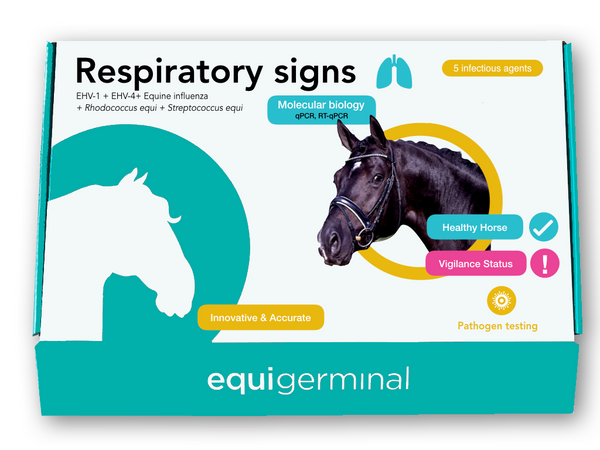
Respiratory signs profile
Pathogen profile Screening of 5 pathogens responsible for respiratory disease in equines: EHV-1, EHV-4, Equine Influenza, Rhodococcus equi (Pneumonia) and Streptococcus equi (Stranglers). Our lab is approved by FEI for EHV-1 testing. Sample 1 nasopharyngeal swab ( see AAEP guidelines) & 5 mL - blood - K3 EDTA tube Turnaround time 2 to 5 working days
€150.00
-
MH Malignant hyperthermia
DNA test DNA test for the Malignant hyperthermia (MH). This test verifies the presence of the dominant MH gene and presents results as one of the following: Sample 30 to 40 - hair roots - envelope or 5 mL - blood - K3 EDTA tube Turnaround time 2 to 5 working days Results description The DNA test verifies the presence of the dominant MH gene and presents results as one of the following: N/ - Negative for MH. Absence of the allele responsible for Malignant Hyperthermia (MH). MH/N - Affected - Positive heterozygous for MH. Presence of one copy of the allele responsible for MH. The horse is affected with the MH disorder and can pass the MH allele to 50% of their progeny when bred. MH/ - Affected - Positive homozygous for MH. Presence of two copies of the allele responsible for MH. The horse is affected with the MH disorder and will pass the MH allele to 100% of its offspring. Additional information Malignant Hyperthermia or MH is a genetic muscle disorder that affects Quarter Horses and related breeds. Horses with the MH mutation may not show any physical signs of the disorder until triggered by exposure to anaesthesia or extreme exercise or stress. Symptoms can include high temperature, increased heart rate, high blood pressure, sweating, acidosis, and muscle rigidity. Symptoms develop rapidly, and if not treated quickly, this condition can be fatal. MH is inherited as an autosomal dominant trait, so the disorder can be passed on even if only one parent has the defective gene. The mutation can be present along with PSSM and if a horse also has PSSM, the symptoms associated with MH can be more severe. Therefore, testing for both PSSM and MH is recommended for Quarter Horse breeds. Although this condition is rare, testing for MH is recommended in case a horse must undergo anaesthesia. Horses that are known to have the MH mutation can be given medication prior to administering anaesthesia to help reduce the severity of the symptoms.
€43.05
-
GBED Glycogen Branching Enzyme Deficiency
DNA test DNA test for the Glycogen Branching Enzyme Deficiency (GBED). This DNA test verifies the presence of the recessive GBED allele. Sample 30 to 40 - hair roots - envelope or 5 mL - blood - K3 EDTA tube Turnaround time 2 to 5 working days Why test? This DNA test identify inapparent carriers of the GBED fatal disorder. In breeding selection is recommended to avoid the crossbreeding of two GBED inapparent carriers to prevent in utero abortion of foetus and the birth of foals affected by GBED. To confirm GBED in affected foals. DNA testing provide important tools for informed choices about breeding selections to prevent abortion and the birth of affected foals. Frequency and affected breeds More frequent in Paint Horses and Quarter horses related breeds. A prevalence of 7,1% and 8,3% in the Paint and Quarter Horse breeds, respectively (Wagner et al., 2006). Results description The DNA test verifies the presence of the recessive GBED alleles and presents results as one of the following: N/ - Negative for GBED. Absence of the defective allele responsible for GBED. GBED/N - Carrier - Positive heterozygous for GBED. Presence of one copy of the allele responsible for GBED. The horse is a carrier for GBED and can pass on a copy of GBED allele to their progeny when bred. GBED/ - Affected - Positive Homozygous for GBED. Presence of two copies of the allele responsible for GBED. The animal is affected by GBED disorder. GBED is lethal causing abortion and/or neonatal mortality. Additional information Glycogen Branching Enzyme Deficiency (GBED) fatal condition caused by an autosomal recessive genetic disorder that results in the bodies' inability to properly store sugar in the glycogen form. In a normal horse, the body stores sugar as energy by converting glucose to glycogen. This genetic disorder affects the production of the enzyme needed to branch the glycogen structure, preventing the horse from being able to adequately store sugar in the glycogen form. This means that the horse will not be able to store enough energy to fuel important organs, such as the muscles and brain. Unfortunately, GBED is always fatal. GBED often causes the foetus to be aborted in utero. When born most affected foals will die in the first weeks of age. Research studies showed that as many as 2,5% of aborted Quarter Horse foetus were homozygous for the GBED mutation (Wagner et al., 2006). Foals born which are affected by GBED suffer from a range of clinical signs associated with this lack of sugar, such as low energy, weakness and difficulty rising. Other clinical signs include low body temperature, contracted muscles, seizures, and sudden death. REFERENCES Tryon RC, Penedo MC, McCue ME, Valberg SJ, Mickelson JR, Famula TR, Wagner ML, Jackson M, Hamilton MJ, Nooteboom S, Bannasch DL. Evaluation of allele frequencies of inherited disease genes in subgroups of American Quarter Horses. J Am Vet Med Assoc. 2009 Jan 1;234(1):120-5. doi: 10.2460/javma.234.1.120. PubMed PMID: 19119976.DOI: 10.2460/javma.234.1.120 Wagner ML, Valberg SJ, Ames EG, Bauer MM, Wiseman JA, Penedo MC, Kinde H, Abbitt B, Mickelson JR. Allele frequency and likely impact of the glycogen branching enzyme deficiency gene in Quarter Horse and Paint Horse populations. J Vet Intern Med. 2006 Sep-Oct;20(5):1207-11. PubMed PMID: 17063718.DOI: 10.1892/0891-6640(2006)20[1207:afalio]2.0.co;2
€43.05
-
HYPP Hyperkalemic Periodic Paralysis
DNA test for the Hyperkalemic Periodic Paralysis Disease (HYPP). This DNA test verifies the presence of the recessive HYPP gene. Sample requirements 30 to 40 hair roots or 5 mL of blood in K3 EDTA tube Turnaround time 2 to 5 working days Why test? This genetic test helps breeders to identify horses that carrying the HYPP recessive gene. Informed choices can be made for breeding selections, and prevent the born of affected foals. All offspring of Impressive should be tested for HYPP. Because HYPP is dominant disorder, the effects of it can also be transposed to other breeds of horses when intermixing occurs. This test is important in preserving the inherited health of all horses. Horses with suspicious symptoms of the disease should also be tested. Results description The DNA test verifies the presence of the recessive HYPP gene and presents results as one of the following: N/ – Normal - Absence of the allele responsible for HYPP. N/H – Affected - Positive heterozygous for HYPP. Presence of one copy of the allele responsible for HYPP. The horse is affected with the HYPP disorder and there is a 50% chance this horse will pass a HYPP allele to its offspring. H/ – Affected- Positive homozygous for HYPP. Presence of two copies of the allele responsible for HYPP. The horse is affected with the HYPP disorder and there is a 100% chance this horse will pass a HYPP allele to its offspring. Additional information Hyperkalemic Periodic paralysis (HYPP) is an inherited disease of the muscle, which is caused by an inherited genetic mutation. A point mutation in DNA exists in the sodium channel gene, which codes for an abnormal channel to be expressed in skeletal muscle. This mutation is passed on to offspring. Sodium channels are “pores” in the muscle cell membrane which control contraction of the muscle fibers. When the defective sodium channel gene is present, the channel becomes “leaky” and makes the muscle overly excitable and contract involuntarily. The channel become “leaky” when potassium levels fluctuate in the blood. This may occur with fasting followed by consumption of a high potassium feed such as alfalfa. Hyperkalemia, which is an excessive amount of potassium in the blood, causes the muscles in the horse to contract more readily than normal. This makes the horse susceptible to sporadic episodes of muscle tremors or paralysis. Severity of attacks varies from unnoticeable to collapse or sudden death. The cause of death is usually respiratory failure and/or cardiac arrest. This genetic defect has been identified in offspring of the American Quarter Horse sire, Impressive. To date, confirmed cases of HYPP have been restricted to descendants of this horse. HYPP is a dominant disorder meaning both homozygous positive (HH) and heterozygous (nH) horses will be affected. Only homozygous negative (nn) horses are not affected by HYPP.
€43.05